Browning Arms Company
Founded: 1878; in Ogden, Utah, United States
Founder: John Browning & Matthew Browning
Headquarters Morgan, Utah , United States
Products
Pistols
Shotguns
Rifles
Parent FN Browning Group
Website browning.com
Browning Brothers gun shop, Ogden, Utah Territory, 1882. From left to right: Thomas Samuel Browning, George Emmett Browning, John Moses Browning, Matthew Sandefur Browning, Jonathan Edmund Browning, and Frank Rushton
Browning Arms Company (originally John Moses and Matthew Sandefur Browning Company) is an American marketer of firearms and fishing gear. The company was founded in Ogden, Utah, in 1878 by brothers John Moses Browning (1855–1926) and Matthew Sandefur Browning (1859–1923). The company offers a wide variety of firearms, including shotguns, rifles, and pistols. Other products include fishing rods and reels, gun safes, sport bows, knives and bicycles.[1]
Initially, the company marketed the sporting (non-military) designs of John Browning, one of the world's most influential and prolific firearms inventors. Nearly all of John Browning's innovative designs have been manufactured under license by other companies, including Winchester, Colt, Remington, FN Herstal, and Miroku. Browning is currently a wholly owned subsidiary of FN Herstal.
Browning Arms Company is best known for the A-Bolt and X-Bolt bolt-action rifles, the BAR semi-automatic rifle, the BPR pump-action rifle, the BPS pump-action shotgun, the Auto-5 semi-automatic shotgun, and the Hi-Power pistol. Browning also manufactures a set of trap shotguns such as the 725 Pro Trap, Citori CX se
A History of the Browning Arms Company, John Browning inspiration for Browning Arms
John M. Browning with his Auto 5 shotgun The Legacy of Browning Arms Company: A Century of Innovation and Excellence
The Browning Arms Company stands as one of the most significant names in the history of firearms, deeply intertwined with the significant work of John Moses Browning, one of the most prolific and influential firearm designers of all time. With a portfolio of notable weapons spanning military, sporting, and personal defense firearms, Browning’s legacy has profoundly shaped the firearms industry, revolutionizing both design and function.
The Early Years: John Moses Browning’s Vision
John Moses Browning was born on January 23, 1855, in Ogden, Utah Territory. His father, Jonathan Browning, was a skilled gunsmith and inventor who instilled in his son a passion for firearm mechanics from an early age. By the age of 13, John had already built his first functional firearm, a single-shot rifle that was reportedly used successfully to kill a marauding bear.
In 1878, at just 23 years old, Browning received his first patent for a single-shot rifle, a design that would later become the Winchester Model 1885 after being purchased by Winchester Repeating Arms Company. This partnership with Winchester would last nearly two decades and result in the development of several of the most well-known lever-action rifles in history.
The Winchester Era (1883-1902)
Browning’s relationship with Winchester was immensely productive, leading to the creation of firearms that would define an era. Some of his most notable Winchester models include:
Winchester Model 1886 – A powerful lever-action rifle designed for larger calibers such as the .45-70 Government, .50-110 Express, and .40-82 Winchester.
Winchester Model 1892 – A compact and smooth-operating lever-action rifle, chambered in pistol-caliber rounds such as .44-40 Winchester.
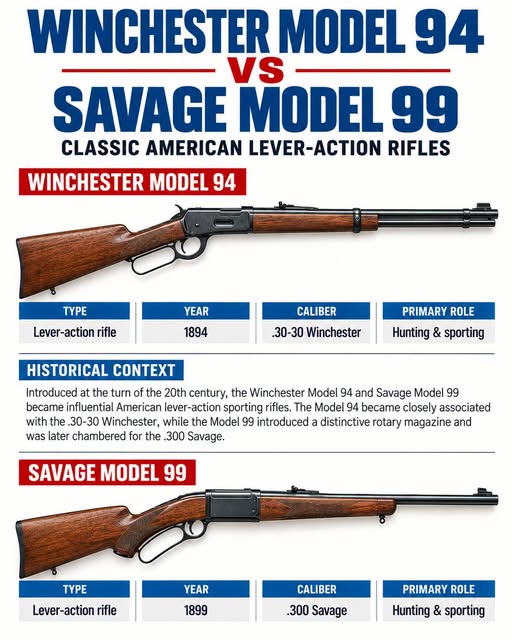
Winchester Model 1894 – One of the most successful lever-action rifles of all time, particularly famous for introducing the .30-30 Winchester cartridge, still widely used today.
Winchester Model 1895 – A significant box magazine-fed lever-action rifle, capable of handling high-powered rounds such as the .30-40 Krag and .30-06 Springfield.
Despite the success of these collaborations, Browning and Winchester eventually parted ways in 1902 over a dispute regarding royalty payments. Browning wanted royalties per unit sold for his new Auto-5 shotgun, while Winchester preferred to purchase designs outright. This disagreement led Browning to seek new partnerships.
The Auto-5 and Browning’s Move to FN and Remington
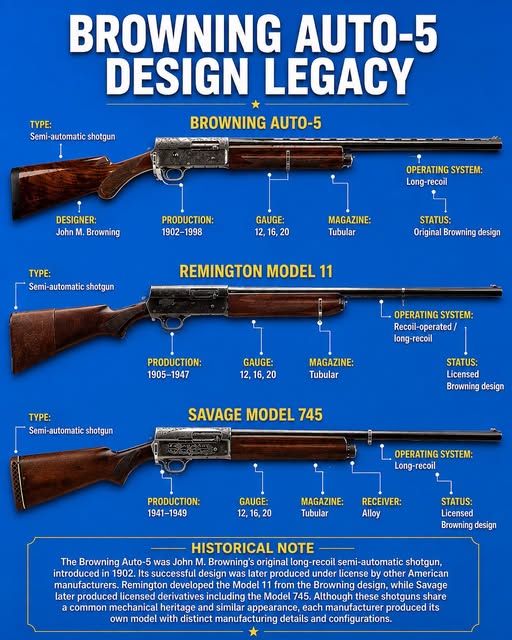
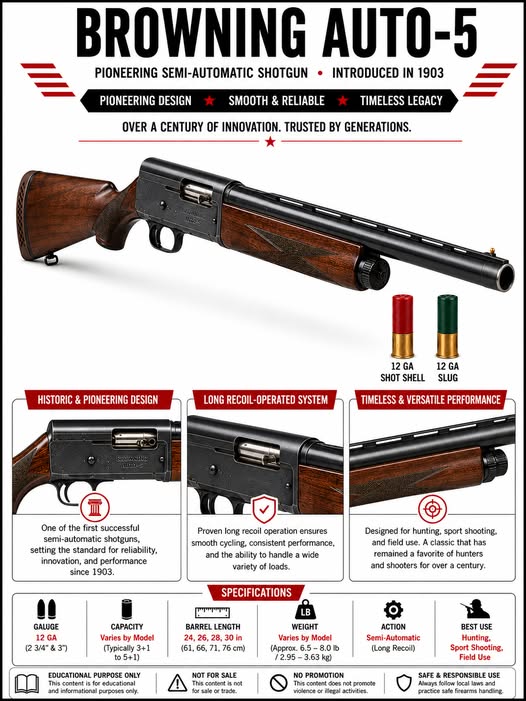
After leaving Winchester, Browning took his innovative Auto-5 shotgun design to Fabrique Nationale (FN) of Belgium in 1902, where it became the world’s first mass-produced semi-automatic shotgun. The Auto-5 featured a unique long-recoil operation system, where the barrel and bolt recoiled together before cycling the next round. Produced for nearly 100 years (1902-1998), the Auto-5 remains one of the most well-known shotguns ever made.
Around the same time, Browning also began working with Colt’s Patent Firearms Manufacturing Company, where he developed the Colt Model 1900, Colt Model 1903 Pocket Hammerless, and the notable Colt M1911.
The M1911: A Pistol That Defined a Century
In 1911, the U.S. Army formally adopted Browning’s M1911 semi-automatic pistol, chambered in .45 ACP. Designed to meet military demands for a sidearm with superior stopping power, the M1911 became the standard-issue pistol for the U.S. Armed Forces from 1911 to 1985. Even after its official replacement by the Beretta M9, elite military units such as Marine Force Recon, Delta Force, and U.S. Army Special Forces continued to use customized versions of the M1911.
Machine Guns and Military Dominance
Browning’s contributions to military firearms were not limited to handguns and rifles. His machine gun designs played a crucial role in both World War I and World War II, as well as later conflicts:
M1917 Heavy Machine Gun – A water-cooled .30 caliber machine gun used extensively in World War I and beyond.
M1919 Medium Machine Gun – An air-cooled variant of the M1917, widely used in World War II, Korea, and Vietnam.
M2 .50 Caliber Heavy Machine Gun (Ma Deuce) – Perhaps Browning’s most enduring design, developed at the end of World War I but seeing widespread service later. The M2 remains in use today as a standard heavy machine gun for the U.S. military and NATO forces.
The Birth of Browning Arms Company (1927)
John Moses Browning passed away in 1926 while working at FN’s factory in Belgium, but his legacy was far from over. In 1927, his brothers and sons established the Browning Arms Company in Ogden, Utah, to continue his work and market firearms under the Browning name.
The Browning Hi-Power: A Global Standard
One of Browning’s last designs was the Hi-Power (P-35) pistol, which would go on to be one of the most widely used military sidearms in history. Though Browning developed the initial concept, the final design was completed by Dieudonné Saive at FN following Browning’s death. The Hi-Power featured a double-stack 13-round magazine, significantly increasing capacity over the M1911. It became the official sidearm of over 50 countries and remained in production until 2017.
Browning Arms Company Today
Today, Browning Arms Company is a subsidiary of FN Herstal, the same company that has produced many of its notable firearms for over a century. Browning Arms continues to manufacture high-end sporting and hunting firearms, including:
Browning Citori – A premium over/under shotgun renowned for its quality and reliability.
Browning X-Bolt – A precision bolt-action hunting rifle with exceptional accuracy.
Browning Buck Mark – A popular .22LR pistol for target shooting.
The Browning brand has also expanded into outdoor gear, including knives, apparel, gun safes, and accessories.
Conclusion: A Legacy of Excellence
The Browning Arms Company stands as a testament to John Moses Browning’s exceptional genius. From pioneering lever-action rifles to revolutionizing semi-automatic shotguns, pistols, and machine guns, his contributions have shaped modern firearms more than any other single individual. Over a century later, Browning Arms firearms remain synonymous with innovation, reliability, and performance, continuing to set industry standards for hunters, competitive shooters, law enforcement, and military personnel worldwide.
Henry History
In every field of human endeavor there is a select group of individuals who are given credit for making such major contributions that they become synonymous with their achievements. In the area of firearms development, one name that must be included on that honored roster is Benjamin Tyler Henry. His invention: The Henry Rifle.
It was Mr. Henry who conceived the first practical, lever action repeating rifle patented in 1860. The Henry gave a single man the firepower of a dozen marksmen armed with muzzle-loading muskets.
America was engulfed in the searing flames of the Civil War, and the first Henry rifles were in the hands of Union soldiers by mid 1862. Due to its revolutionary design and rapid rate of fire, the Henry quickly found popularity both with the military and civilian purchasers. Early sales were especially brisk in Kentucky, Illinois, Missouri and Indiana.
Group portrait of the 7th Illinois Volunteer Infantry during the American Civil War
7th Illinois Volunteer Infantry
With its reliable .44 caliber rimfire metallic cartridge, the Henry produced a rapid and highly accurate fire. Reports of the successful use of Henry rifles in the Civil War were numerous. The incredible firepower unleashed by the Henry is evident in Major William Ludlow’s account of the Battle of Allatoona Pass. “What saved us that day was the fact that we had a number of Henry rifles” wrote Major Ludlow. “This company of 16 shooters sprang to the parapet and poured out such a multiplied, rapid and deadly fire, that no men could stand in front of it and no serious effort was made thereafter to take the fort by assault.”
After an encounter with the 7th Illinois Volunteer Infantry, which had the good fortune to be armed with Henrys, one Confederate officer is credited with the phrase, “It’s a rifle that you could load on Sunday and shoot all week long.”
The Henry rifle would go on to play a significant, if not dominant role in the frontier days of the American West. It would soon become one of the most legendary, respected and sought after rifles in the history of firearms. A contemporary rifle collection isn’t complete without one.
Henry Repeating Arms is a firearms manufacturing company. As of 2023, Henry Repeating Arms ranked in the top three of U.S. long gun manufacturers, and fifth of U.S. firearm manufacturers, producing over 400,000 firearms annually.[1]
History
Founding & Early Development (1996-2000Henry Repeating Arms was founded by Anthony Imperato and his father, Louis Imperato, in 1996 in Brooklyn, New York, after securing the trademark for the Henry brand. The name Henry Repeating Arms is inspired by Benjamin Tyler Henry, the inventor who patented the first repeating rifle in 1860, known as the Henry rifle. The company has no direct affiliation or historical connection to Benjamin Tyler Henry or to the New Haven Arms Company, which sold the original Henry rifle from 1862 to 1864. Henry Repeating Arms started with rimfire lever-action rifles but eventually expanded to include centerfire designs, shotguns, and handguns. The first rifle model, the H001 Classic Lever Action .22, was shipped in March of 1997. Two years later, the flagship Golden Boy model was introduced.
The original company motto was: “Made in America and Priced Right.”[4] The current company motto is: “Made in America, or Not Made at All.”[5]
Growth & Expansion (2000-2013)
In 2006, certain assets of Wright Products, as well as their 140,000 square foot facility in Rice Lake, Wisconsin, were acquired by Anthony Imperato. Wright Products was a supplier of components to Henry Repeating Arms since 1998, but was ceasing operations. Henry Repeating Arms retained 17 employees, including Andy Wickstrom, then Director of Operations at Wright Products. In 2015, Wickstrom was promoted to Vice President and General Manager, and then announced as company President in 2021.
Henry Repeating Arms maintained its headquarters in Brooklyn until announcing they would move their company to Bayonne, New Jersey. In September 2008, the company moved from its 40,000 square foot Brooklyn facility to a building with 109,000 square feet and brought 95 employees with them. In 2012, the Bayonne facility sustained massive damage from Hurricane Sandy with three feet of saltwater across the building, including machinery and inventory. The company was able to resume operations in three months with the help of employees and vendors. In 2013, despite the damage the Bayonne facility sustained from Hurricane Sandy, the company reported it shipped 300,000 rifles and employed 300 people.
Manufacturing Expansion (2014-2025)
By 2014, Henry Repeating Arms expanded their operations in Wisconsin and began manufacturing complete steel centerfire rifles at its Rice Lake facility.[7] In 2021, they bought a second manufacturing facility with 84,000 square feet[3] on 13.5 acres in Ladysmith, Wisconsin. The new facility would be less than an hour away from the facility in Rice Lake and would employ over 100 people.[14] In the spring of 2025, Henry Repeating Arms announced they would be moving their headquarters and all operations from New Jersey to Wisconsin. Their headquarters would move to the Rice Lake facility and manufacturing would move to their two facilities in Ladysmith, with a third facility rumored to be closing in the summer. With four facilities in Rice Lake and Ladysmith, the company is estimated to have about 400,000 square feet of manufacturing operations.
Henry Repeating Arms announced a new Special Products Division (SPD) in March of 2025 that would research advancements in firearms design and technology. This division would include research into different materials, metallurgy, and improved manufacturing processes.
Production Milestones
Henry Repeating Arms produced its first model, the Henry H001 Classic Lever Action .22, in March 1997. During their 20th anniversary in 2017, the company manufactured its one millionth H001 rifle.[2]
In 2022, Henry Repeating Arms celebrated its 25th anniversary and donated 1,000 Golden Boy “Silver Anniversary” limited edition rifles to raise $1 million for its charity constituencies with Guns For Great Causes. They also manufactured other limited edition models, including a special edition New Original Henry and a 25th anniversary edition of the H001 Classic Lever Action .22.[16]
In 2023, Henry Repeating Arms was ranked #5 in “Top 40 U.S. Manufacturers” and #3 in “U.S. Long-Gun Production” from NSSF-adjusted NICS data. The data reported the company had produced 8,626 pistols, 5,223 revolvers, 377,743 rifles, and 13,257 shotguns – making it a total of 404,849 firearms.[1]
Operations
Henry Repeating Arms employs over 800 people and operates three manufacturing facilities totaling more than 350,000 square feet.[17] The company headquarters is located in Rice Lake, Wisconsin, and the other factories are in Bayonne, New Jersey, and Ladysmith, Wisconsin. Louis Imperato served as chairman of the company from its start in 1996 until his passing in November 2007. Anthony Imperato currently serves as the Founder & CEO, and Andy Wickstrom is the company president.[18]
Products
Henry H001 Classic Lever-Action .22LR
Henry Big Boy Steel Carbine .357 Magnum
Henry Homesteader Carbine in 9mm Luger
Henry Repeating Arms manufactures rifles, shotguns, and revolvers. The company produces a broad range of lever-action rifles in both rimfire and centerfire calibers, in a variety of finishes, including alloy, steel, hardened brass, hardened silver, color case hardened, and All-Weather.
The company’s signature model is the Henry Golden Boy, a rimfire lever-action whose moniker is "the gun that brings out the west in you." The company has sold over one million of its model H001 Lever-Action .22 rifle, which has become a staple of the firearms industry.[19] The company donated serial number one million which was auctioned and raised over $50,000.[20]
The Henry US Survival AR-7 is an updated version of the U.S. Air Force AR-7, a semiautomatic take-down .22LR designed so that all of the rifle's components fit into the buttstock.
The Henry Mini Bolt is a beginner's stainless steel single-shot .22 rifle that is the official youth rifle of the USA Shooting Team.
Henry Repeating Arms is the official firearms licensee of the Boy Scouts of America, and several Henry Boy Scout editions are available.
The Henry Single Shot Shotgun is available in hardened brass or steel in 12 and 20 gauge, and .410-bore.
Henry also manufactures a garden gun smoothbore in .22 long rifle, intended for pest control using only "snake shot" .22-caliber shotshells, like those commonly sold by CCI Ammunition.[21]
In 2023, Henry released the Henry Homesteader, a 9mm pistol caliber carbine that has adapters to take their proprietary magazines, or certain GLOCK, SIG Sauer, or Smith & Wesson M&P magazines.
The Henry Single Shot rifle is also available in hardened brass or steel in over 10 centerfire calibers. Henry Repeating Arms released the Side-Gate lever-action rifle chambered in .30-30 Win, .38-55 Win, .35 Rem, and .45-70 Gov't in 2018. This is their first rifle to feature a loading gate allowing ammo to be loaded, reloaded, or topped off as needed from the rear of the tubular magazine. The gun can be unloaded quickly from the muzzle end of the tubular magazine.[22]
In 2023, Henry introduced the Big Boy Revolver chambered in .357 Magnum with a brass square or rounded grip frame.[23]
The Mare's Leg was introduced in 2011 in both a rimfire and centerfire versions. The rimfire version has 12.8-inch barrel and the centerfire version has a 12.9-inch barrel.[23]
The Long Ranger, which was introduced in 2016 and uses a detachable box magazine and a 6-lug, rotary bolt head.[23] The box magazine allows use of pointed bullets.[23]
Promotion
Henry Repeating Arms' corporate motto is "Made In America Or Not Made At All."
Awards
Image of a Henry Golden Boy rifle laying on a wooden floor.
Henry H004 Golden Boy .22 S/L/LR
Henry Repeating Arms was recognized for exceptional customer service in June 2016 by the American Business Awards and received the Stevie Award for both Customer Service and Social Media. It is the only time a firearms company has received these awards.
Henry Repeating Arms was named 'Company of the Year' in Sporting Classics' 16th annual Awards of Excellence in 2018.
In 2019, the Henry Big Boy All-Weather rifle won the fourth annual "Coolest Thing Made in Wisconsin" bracket-style contest presented by Wisconsin Manufacturers & Commerce.
Henry Repeating Arms was awarded the 2021 Top Development Award by Momentum West, a Wisconsin regional economic development company, for its expansion in Ladysmith, Wisconsin.





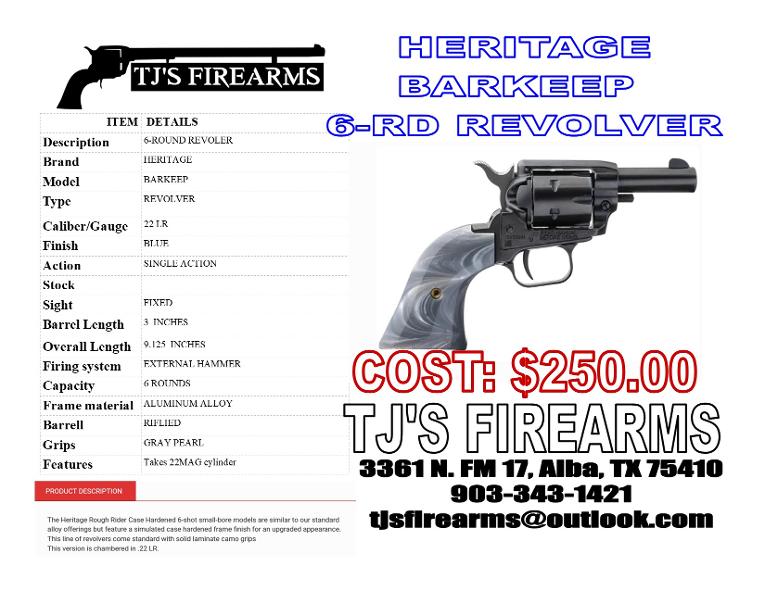
HERITAGE FIREARMS: A BRIEF HISTORY
Here are some key takeaways from the article:
Heritage Firearms is a family-owned business that has been in operation for over 30 years.
The company produces a wide variety of firearms, including rifles, shotguns, and pistols.
Heritage Firearms’ products are known for their quality and craftsmanship.
The company is committed to providing its customers with the best possible products and service.
IF YOU’RE IN THE MARKET FOR A NEW FIREARM, BE SURE TO CHECK OUT HERITAGE FIREARMS. YOU WON’T BE DISAPPOINTED.
Heritage Firearms is a company that produces a wide variety of firearms, including rifles, shotguns, and pistols. The company was founded in 1986 by two brothers, John and Jeff Reese. Heritage Firearms is based in North Carolina, and its products are sold throughout the United States and internationally.
Heritage Firearms is known for its high-quality firearms at affordable prices. The company offers a variety of models to choose from, each with its own unique features and benefits. Heritage Firearms also offers a variety of customization options, so customers can create the perfect firearm for their needs.
Heritage Firearms is a firearms manufacturer based in Prescott, Arizona. The company was founded in 1873 by John Moses Browning, and is one of the oldest firearms manufacturers in the United States. Heritage Firearms is known for its production of high-quality, affordable firearms. The company’s products are popular with hunters, target shooters, and collectors alike.
History of Heritage Firearms (1873-Present)
1873: The company is founded by John Moses Browning in Ogden, Utah.
1884: The company begins producing the Winchester Model 1873 rifle.
1892: The company begins producing the Winchester Model 1892 rifle.
1903: The company begins producing the Winchester Model 1903 rifle.
1911: The company begins producing the Colt M1911 pistol.
1927: The company is acquired by Remington Arms.
1984: The company is acquired by Freedom Group.
2012: The company is acquired by Big Green Inc.
Products of Heritage Firearms
Heritage Firearms produces a wide variety of firearms, including rifles, shotguns, pistols, ammunition, and accessories. The company’s rifles are known for their accuracy and reliability, and are popular with hunters and target shooters. The company’s shotguns are also well-respected, and are popular with waterfowl hunters and home defense enthusiasts. The company’s pistols are well-made and affordable, and are popular with concealed carry permit holders and recreational shooters. The company’s ammunition is high-quality and affordable, and is popular with hunters and target shooters. The company’s accessories include scopes, slings, holsters, and other items that are designed to enhance the performance and utility of the company’s firearms.
Heritage Firearms is a leading manufacturer of firearms in the United States. The company’s products are known for their quality, affordability, and versatility. Heritage Firearms is a company that is committed to providing its customers with the best possible firearms and accessories.
Who Makes Heritage Firearms?
Heritage Firearms is a company that manufactures a variety of firearms, including revolvers, rifles, and shotguns. The company was founded in 2003 by Jeff Quinn and is headquartered in Prescott, Arizona. Heritage Firearms is a privately held company and does not disclose its financial information.
History of Heritage Firearms
Heritage Firearms was founded in 2003 by Jeff Quinn, a former gunsmith and firearms writer. Quinn had been working as a gunsmith for several years when he decided to start his own company. He founded Heritage Firearms with the goal of producing high-quality firearms at affordable prices.
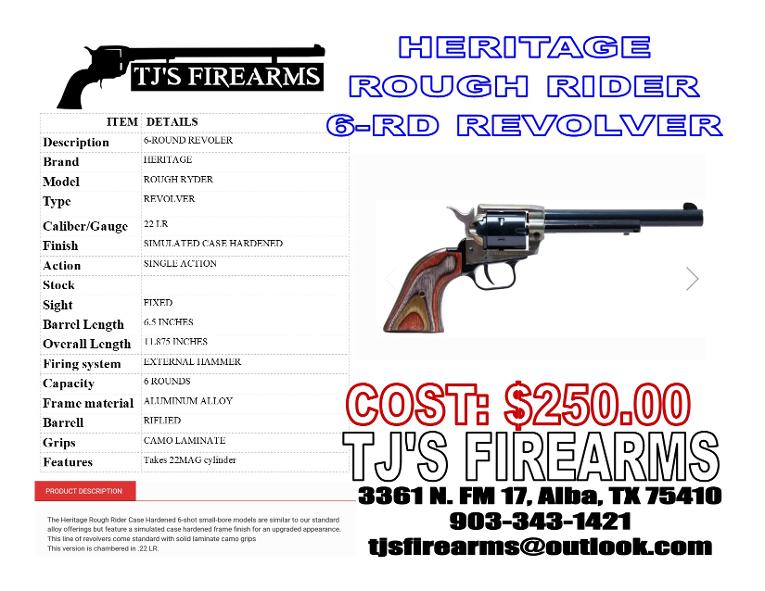
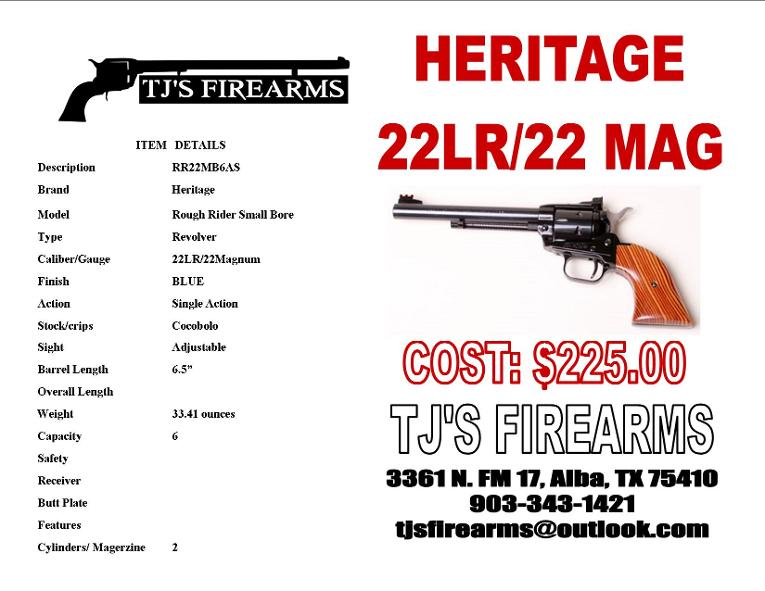
The company’s first product was the Heritage Rough Rider revolver, which was based on the Colt Single Action Army revolver. The Rough Rider was an instant success and helped to establish Heritage Firearms as a major player in the firearms industry.
In the years since its founding, Heritage Firearms has expanded its product line to include a variety of revolvers, rifles, and shotguns. The company also offers a variety of accessories and parts for its firearms.
Products of Heritage Firearms
Heritage Firearms manufactures a variety of firearms, including revolvers, rifles, and shotguns. The company’s products are known for their high quality and affordability.
Some of the most popular products from Heritage Firearms include:
The Heritage Rough Rider revolver
The Heritage Big Boy rifle
The Heritage Side by Side shotgun
Manufacturing Process of Heritage Firearms
The company uses a variety of manufacturing methods, including forging, casting, machining, and assembly. The company also uses a variety of materials, including steel, aluminum, and polymer.
Sales and Distribution of Heritage Firearms
The company sells its products through a variety of channels, including online retailers, brick-and-mortar stores, and gun shows. The company also exports its products to a variety of countries around the world.
Heritage Firearms is a leading manufacturer of firearms in the United States. The company’s products are known for their high quality and affordability. The company sells its products through a variety of channels, including online retailers, brick-and-mortar stores, and gun shows. The company also exports its products to a variety of countries around the world.
Who Makes Heritage Firearms?
Heritage Firearms is a company that manufactures a variety of firearms, including rifles, shotguns, and pistols. The company was founded in 1989 by Jeff Quinn and is based in Fort Worth, Texas. Heritage Firearms is known for its high-quality products and affordable prices.
What types of firearms does Heritage Firearms make?
Heritage Firearms manufactures a variety of firearms, including:
Rifles
Shotguns
Pistols
The company also offers a variety of accessories for its firearms, including scopes, stocks, and grips.
Where can I buy Heritage Firearms?
Heritage Firearms products are available for purchase online and at a variety of retailers across the United States. The company also has a retail store in Fort Worth, Texas.
What is the warranty on Heritage Firearms products?
Heritage Firearms products come with a limited warranty against defects in materials and workmanship. The warranty period varies depending on the product.
What are the customer service hours for Heritage Firearms?
Heritage Firearms customer service is available Monday through Friday from 9am to 5pm CST. The company can be reached by phone at 1-800-551-5485 or by email at [email protected]
What are the most popular Heritage Firearms products?
Some of the most popular Heritage Firearms products include:
The H-1700 Single-Shot Rifle
The H-1800 Pump-Action Shotgun
The H-1900 .22 LR Pistol
These products are popular for their high quality, affordability, and versatility.
Heritage Firearms is a company that produces a variety of high-quality firearms, including rifles, shotguns, and pistols. The company is known for its attention to detail and craftsmanship, and its products are well-respected by shooters of all levels. Whether you’re looking for a new hunting rifle or a competition pistol, Heritage Firearms has something for you.
MARLIN FIREARMS,
Story starts in 1836, when John Mahlon Marlin was born in Connecticut. He grew up in New England and entered the tool and die trade as a young man. During the Civil War, he started building guns, working at the Colt plant in Hartford. In 1870, he struck out on his own and founded Marlin Firearms Company in New Haven, Connecticut. He started off making single-shot brass framed derringers in .22 rimfire, and eventually added .32 and .38 caliber rimfire derringers to his product line. In 1875, Marlin added rifles to his product offerings, manufacturing the single-shot Ballard rifles (which had previously been made by others). A strategic business move was made in 1881, when Marlin introduced the Model 1881 lever-action repeating rifle. This was a well-built, accurate rifle, chambered for powerful hunting rounds like the .45-70 and .38-55. Now this was in the hey-day of the powerful Sharps single-shot rifles, but Marlin was making a big-bore high-powered rifle, and they were making it in a lever-actioned repeater (competing for the same market niche that Winchester had created with the Model 1876). The Marlin Model 1881 was well-received and firmly established Marlin in the levergun market.
A Marlin "trademark" was established a few years later when Marlin introduced the Model 1889, the first levergun to have a solid top and eject the empties out of the side of the receiver (the origin of the term "Marlin Safety"), instead of out the top (like Winchester leverguns). While 19th century levergunners weren't interested in mounting telescopic sights on their rifles, they did appreciate the fact that these new guns didn't toss hot brass into their faces (or down their shirt collars). The 1889 was chambered for the popular pistol rounds of the day, like .44-40, .38-40, .32-20 and .25-20. This rifle would eventually lead to the Model 1894, a design that Marlin continues to manufacture today (and is a favorite of Cowboy action shooters).
Marlin had a stroke of genius in 1891 when they applied this solid top/side ejection to a smaller framed .22 rimfire levergun, that they named the Model 1891. This would be the beginnings of the beloved Marlin 39A, giving rise to what, more or less, amounts to the longest continuously manufactured rifle in the world (production was briefly suspended from 1917-1922 for the War effort). When it was re-introduced in 1922, this beautiful little rifle was renamed the Model 39. Almost 3 million have been made to date. The Marlin 39A has been called "the Cadillac of the .22s", and I couldn't agree more. I bought my first Marlin 39A (from McBride's, a fine gunshop in Austin, Texas) when I was a freshman in college. That rifle has logged many, many miles with me over the years, perforating thousands of pop-cans, and filling many a crock-pot with the fixin's for Brunswick stew. That rifle was given to my step-son when he turned 18, and he continues to cherish it as I have over the decades (yes, I did go out and buy myself a replacement!).
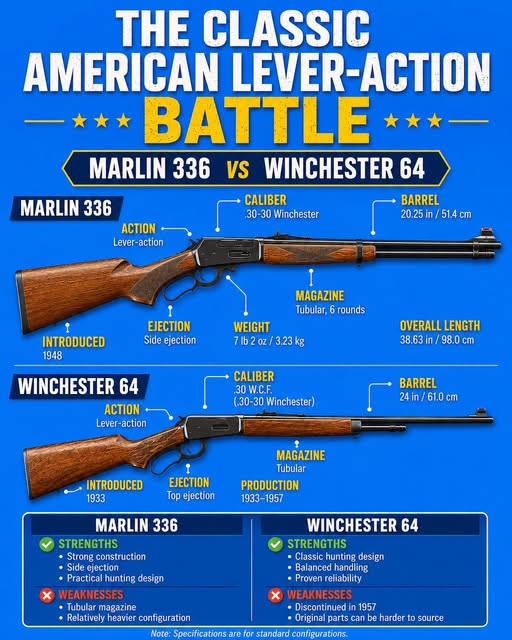
In 1893 Marlin applied the "solid-top, side-ejection" concept to full-length rifle cartridges with the Model 1893. Over the years, this rifle would be chambered in .25-36, .30-30, .32 Special, .32-40, and .38-55. This rifle was later re-named the Model 1936 (care to guess when? later this designation was shortened simply to the Model 36). The 1893/1936/36 had the same side ejection that its predecessors had, with the flat-sided bolt and an open, square-cut bolt raceway milled through the rear of the receiver for the bolt to move through. The Model 36 was manufactured up through 1948.
As long as we're on the topic of 1890s vintage leverguns, a little-known fact is that Marlin made the first 8,000 or so Savage 1895s (the predecessor to the Savage 99). It seems that Mr. Savage had the rifle design, but did not have the manufacturing capabilities, so he contracted this work out to Marlin. These rifles can be identified by the "JM" that they have stamped on the bottom side of the barrel.
After the turn of the century the Marlin Company went through a tumultuous series of ownership changes. In 1901, John Marlin died and his two sons inherited the business as a part of his estate. In 1910, John Barlow retired from his post leading the Ideal Reloading Tool Company, and Marlin bought Ideal, makers of the respected Ideal bullet moulds (Marlin also took over publication of the Ideal Handbooks, which they had been contributing to previously). In 1915 the winds of war were swirling and it became apparent that the United States might get involved in the war festering in Europe. A group of investors (William Bonbright & Co. and Kissell-Kinnicut & Co., both associated with J. P. Morgan) bought the Marlin Company (at about the same time Marlin sold off the Ideal Reloading Tool Company to Phineas Talcott, who later sold it to Lyman). A. F. Rockwell became president of the new Marlin Arms Corporation, and in 1916 re-named it the Marlin Rockwell Corporation, which went on to become one of the largest machine gun manufacturers in the world. In 1919, the owner/investors were lead by John. F. Moran. As World War I ended, business faltered, and Marlin began to divest itself of the various other businesses that it had acquired during the war years (including the manufacture of ball bearings, roller bearings, radiators, automobiles, wire, bombs and high explosive projectiles). With a vastly simplified product line focused specifically on sporting firearms, the Marlin Firearms Corporation was formed in 1921. But business was not good, and in 1922 the company filed for bankruptcy and went into foreclosure. In 1924, the company was put on the auction block. According to the history posted on the Marlin website ( http://www.marlinfirearms.com ), this auction was attended by "several curious children, a small dog and a lawyer named Frank Kenna". Mr. Kenna bid $100 on the Marlin properties, and won the auction. He also got the $100,000 debt that went along with them. Kenna got the business back on stable footing and re-introduced several of the popular guns from before the War. The Marlin Firearms Company has been in the Kenna family ever since.
In the mid 1950s, Marlin began experimenting with modernizing levergun design. In 1956, they introduced the Model 56, the first of an entirely new class of Marlin leverguns. These rifles had a very short 2" lever-throw, allowing for very speedy reloading, and were named the Marlin "Levermatic". The Model 56 was chambered for the .22 Long Rifle, and was fed with a box-magazine. Shortly thereafter, a tubular magazine version was introduced (named the Model 57), along with the Model 57 Magnum, chambered in the .22 Magnum round. Winchester was making news with its sleek, new Model 88, chambered in hunting rounds like the .308 Winchester, and in 1962 Marlin entered the centerfire market with a version of it Levermatic, tailored for short centerfire rounds. Thus was born the centerfire Model 62, chambered in .357 Magnum, .256 Winchester Magnum, and .22 Remington Jet (and later on in .30 Carbine). The Marlin Levermatics were not popular sellers and were dropped from production by 1973.
Starting somewhere around 1960, Marlin also made a number of "store brand" rifles for a variety of outlets (Sears, J. C. Higgins, Wards, etc.). Most notable in this regard was the Glenfield line of guns that were produced by Marlin up through about 1982. The Glenfield Model 30 was basically a Marlin 336 with a cheaper birch stock, and stamped checkering. The Glenfield line was made for high volume mass-marketers (e.g. Wal-Mart, K-Mart), who were looking for an affordable rifle that still provided good value. The Glenfield rifles do not have the Marlin signature bullseye, or white line spacers, but they shoot and handle just like Marlins.
Working up loads for new guns is one of my favorite past times. I have played with a lot of different rounds over the years, but one of my favorite ones is the .444 Marlin. In fact, I like it so much that I recently had Mountain Molds make a mould for me, designed specifically for the .444 Marlin levergun -- a 300 grain ogival round-nose flat-point with a GC, and a 73% meplat. My favorite load for this bullet is 49.0 grains of H322 for 2100 fps, which delivers excellent accuracy. If you find me in the woods during elk season in the Pacific Northwest, don't be surprised if I'm carrying this load. I really like it.
The next new idea that Marlin came out with was a mixture of old and new. With the surging popularity of the .44 Magnum handguns in the 1960s, Marlin re-introduced the short-action Model 1894 in 1969, chambered for this modern high-pressure round. This combination created a light, hard-hitting carbine, ideal for still-hunting in brushy country, where the fast-handling characteristics of the 1894 were a real bonus. The .357 Magnum chambering was added in the 1970s, and later (around 1990) a short run of .41 Magnum 1894s was also made. With the growing popularity of both the 1894 and cowboy action shooting, other cartridges were added to the line, later in the 1990s (.32-20, .25-20, .45 Colt, .44-40, even the .218 Bee!). Over a million 1894s have been produced.
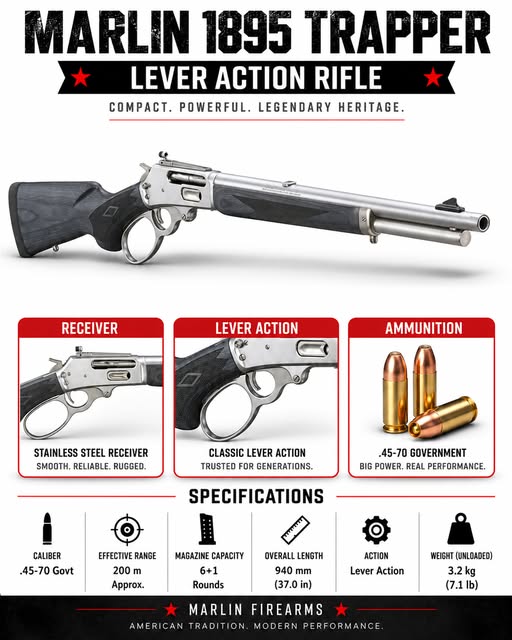
The next "new idea" that Marlin experimented with was another classic combination of old and new, and one that has resonated strongly with American hunters for the last 30+ years. In 1972-1973 Marlin introduced a new rifle based on their 336 action, chambered for the .45-70 Government cartridge. This rifle was named the Model 1895 (not to be confused with the old Model 1895, which was a unique variant of the 1893 action, and was also chambered for large, powerful hunting cartridges). This new .45-70 levergun was an immediate hit with hunters who pursued big game in heavy woods. Attention must be paid to overall cartridge length in these rifles, and loads must be heavily crimped, for ammunition to function properly. However, with suitable bullets properly loaded, this gun delivers impressive performance (e.g. 400 grain bullets at 1700-1800 fps).
Marlin has been around for 136 years (as of this writing) and they have made some of the most popular leverguns ever. Not a bad legacy for a young man from New England, setting out on his own to make a living, right after the Civil War. 26 million guns later, they continue to build on this legacy every day. For those that would like to learn more about Marlin and its history, I recommend the book "Marlin Firearms: A History of the Guns and the Company That Made Them", written by William S. Brophy and published by Stackpole Books (1989). The Marlin Collectors Association ( http://www.marlin-collectors.com ) is also a valuable source of information.

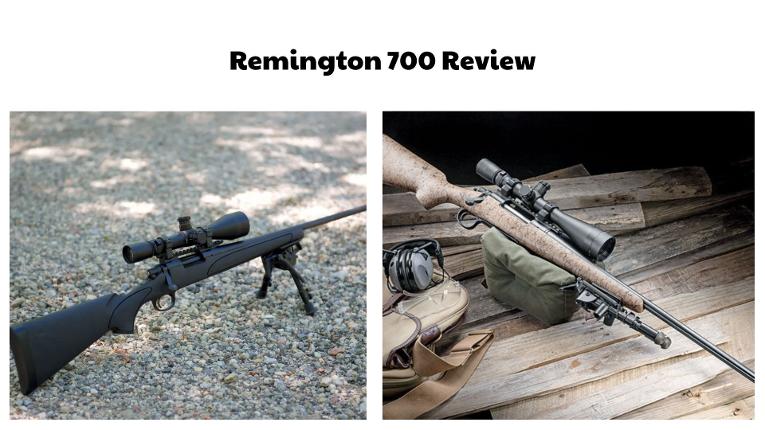
THE HISTORY AND LEGACY OF THE REMINGTON ARMS COMPANY
The saga of the Remington Arms Company, one of the oldest and most renowned gun manufacturers in the world, began in 1816 when a young blacksmith named Eliphalet Remington II decided that he could build a better gun than he could buy. And so, in the upstate wilderness of Ilion, New York, Remington Arms was born.
Eliphalet’s first firearm was a flintlock rifle, a popular weapon of the period, famed for its accuracy and range. Though modest, the success of this rifle at a local shooting match prompted others to place orders, leading to the establishment of the E. Remington and Sons company. In 1845, Remington started production of their percussion-cap rifle, a revolutionary technology that greatly improved the reliability of firearms.
The demand for Remington Arms firearms significantly grew during the Civil War. In 1862, the company received its first big military contract to produce 10,000 “New Model Army” .44 caliber revolvers, building on the earlier Remington Beals design by Fordyce Beals. This single-action six-shot revolver, using a .44 caliber cartridge, was a powerful and reliable sidearm and was widely used by the Union army.
In the post-war years, Remington Arms made its mark with two notable rifles: the Rolling Block and the Remington No. 1. Introduced in 1865, the Rolling Block rifle was a breech-loading gun known for its strength, reliability, and accuracy. This firearm, chambering various cartridges from .22 to .50 caliber, gained popularity not only in the United States but also around the world, being adopted by several nations’ military and winning numerous shooting competitions.
The Remington No. 1, also known as the Remington Creedmoor, was a target rifle introduced in 1873, specifically designed for the new sport of long-range target shooting. Chambered for the .45-70 Government cartridge, the Creedmoor was praised for its extreme accuracy, playing a crucial role in winning the international long-range match at the Creedmoor Shooting Range in 1874.
In 1888, Marcellus Hartley and partners acquired E. Remington and Sons, reorganizing it into the Remington Arms Company. The company continued to innovate, producing firearms like the Model 8 semi-automatic rifle, the brainchild of legendary firearms designer John Browning. Introduced in 1906, the Model 8 was chambered for a variety of cartridges, including .25, .30, .32, and .35 Remington, and was notably used by law enforcement agencies and hunters.
During World War I, Remington played a vital role in arming the U.S. and its allies. The company’s most significant contribution was the production of the Model 1917 bolt-action rifle. Adapted from a British design (Pattern 14 Enfield), the Model 1917 was chambered for the .30-06 Springfield cartridge and became one of the main service rifles of American soldiers during the war.
Following the war, Remington introduced several popular firearms. The Model 31 pump-action shotgun was one, gaining a reputation as one of the finest slide-action shotguns ever created. Another was the Model 720, a bolt-action sporting rifle based on the Model 1917 and chambered for the .30-06 Springfield, praised for its accuracy and reliability.
However, it was the Model 700 bolt-action rifle, released in
1962 and chambered in a broad array of cartridges, that would become Remington’s flagship product. Its excellent accuracy and affordability helped it become one of the most popular hunting rifles in America.
During World War II, Remington produced the Model 1903A3, a variant of the Springfield Model 1903 bolt-action rifle, chambered for .30-06 Springfield. They also manufactured the M1911 pistol, a .45 ACP semi-automatic pistol originally designed by John Browning, which was widely used by U.S. forces during both world wars.
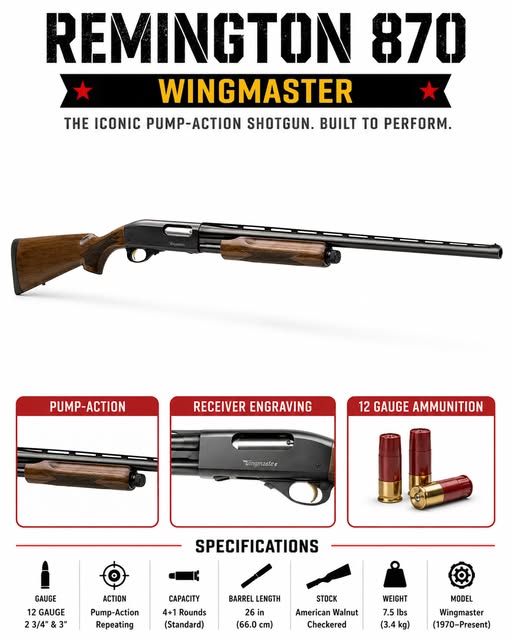
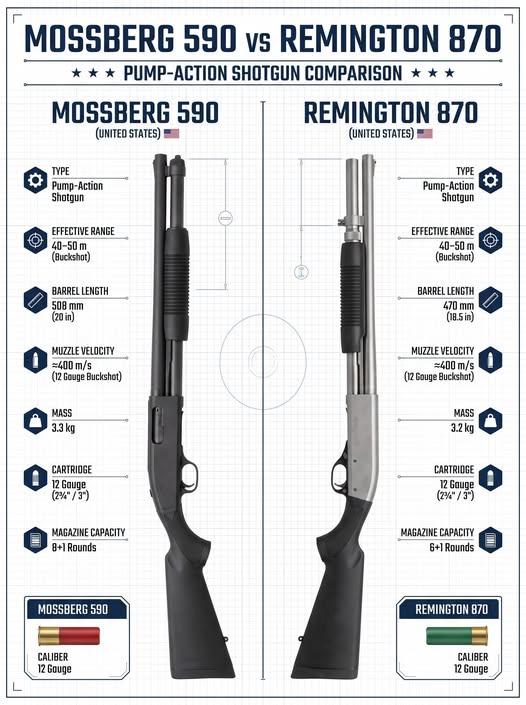
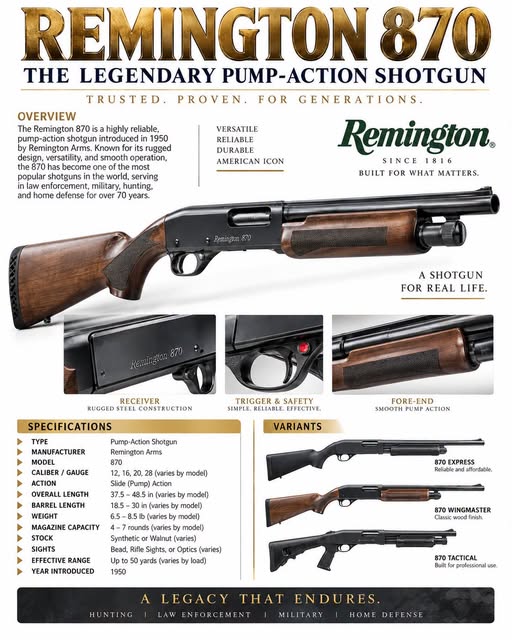
Post-WWII, Remington introduced the Model 870 pump-action shotgun in 1950, which became one of the best-selling shotguns in history. Its versatility, reliability, and affordability made it popular among hunters, law enforcement, and home defense enthusiasts.
In 2008, Remington introduced the R15, a semi-automatic rifle inspired by the AR-15 platform, chambered for cartridges like .223 Remington and .450 Bushmaster. This demonstrated Remington’s adaptability to the burgeoning market for modern sporting rifles.
However, the company has faced several challenges in recent years, including bankruptcy proceedings and controversies surrounding the misuse of their firearms. Regardless, the legacy of the Remington Arms Company persists, as does their commitment to manufacturing firearms for sport, law enforcement, and defense.
In conclusion, Remington’s history is marked by continuous innovation, adaptation, and the consistent production of iconic, reliable, and high-performing firearms. From its humble beginnings in Ilion, New York, to its prominent position on the global stage, the Remington Arms Company has undoubtedly left an indelible mark on the world of firearms and continues to shape its future.
Origins and Early Years (1816–1856)
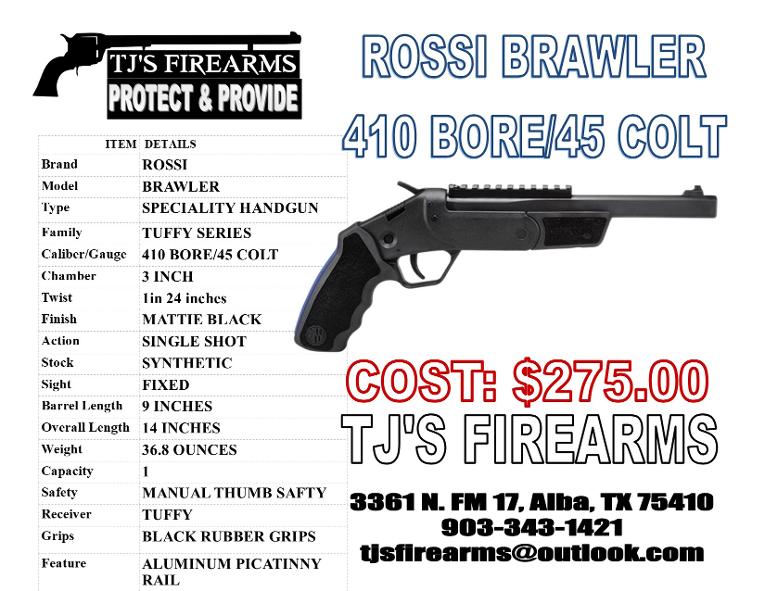
ROSSI FIREARMS
It was 1889 when Amadeo Rossi founded the firearm manufacturing company that bears his name—known better today as simply Rossi—in São Leopoldo, Brazil. The city, established roughly 60 years before the factory opened its doors, is located in the country’s south and was the first to aggressively invite German immigration. It’s likely the dedication to precision the Europeans brought played a role in how fast the company established a reputation for quality, although there’s no doubt the local workforce’s skill and ingenuity deserves the bulk of the credit. Rossi remains one of the biggest gunmakers in Brazil and hasn’t moved from the city it was founded in, even after 133 years.
The few Rossi guns that trickled into the United States in the 1960s proved to be reliable, accurate and affordable. Though demand for guns built with that reputation grew stateside, the several small firms that initially handled importation had limited success. The company recognized an opportunity was being missed, so in 1997, BRAZTech International became its exclusive North American importer. That same year, it also entered into an agreement with Taurus to produce several revolvers under the Rossi label.
The partnership between the Brazilian firms was a productive one, and in 2008, Taurus purchased Rossi, but retained its entire staff and factory. The change resembled more of a friendly merger, though, with both companies working in concert to improve the rifle lineup. By 2010, fresh and innovative designs were coming from the collaboration, including the still popular single-action, rotating cylinder, Circuit Judge rifle.
The rifle/shotgun continues to sell well to this day, for good reason. When B. Gil Horman reviewed one for American Rifleman, he concluded, “The Circuit Judge chambered for .45 Colt or .410 shotshells will comfortably fill any role appropriate for a .410 shotgun and it produces solid accuracy with .45 Colt loads for hunting medium-sized game at short ranges.”
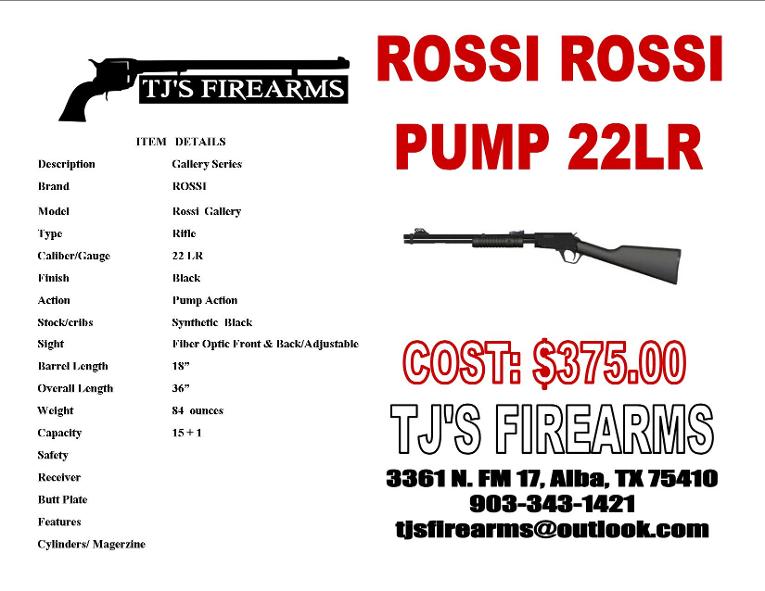
Today, the company’s lineup includes lever actions, semi-automatics, single-shot Tuffy shotguns and those Circuit Judges. It also offers fresh-from-the-factory pump-action rifles chambered in .22 LR—like the gallery guns of yesteryear, but manufactured to modern tolerances.
Today, Rossi operates as a brand under the Taurus Armas umbrella, with manufacturing facilities in São Leopoldo, Brazil, and distribution networks spanning the globe. As part of Taurus — the largest firearms manufacturer in Latin America and one of the top five handgun producers in the world — Rossi benefits from economies of scale, advanced manufacturing technology, and the financial resources to invest in product development and quality improvement.
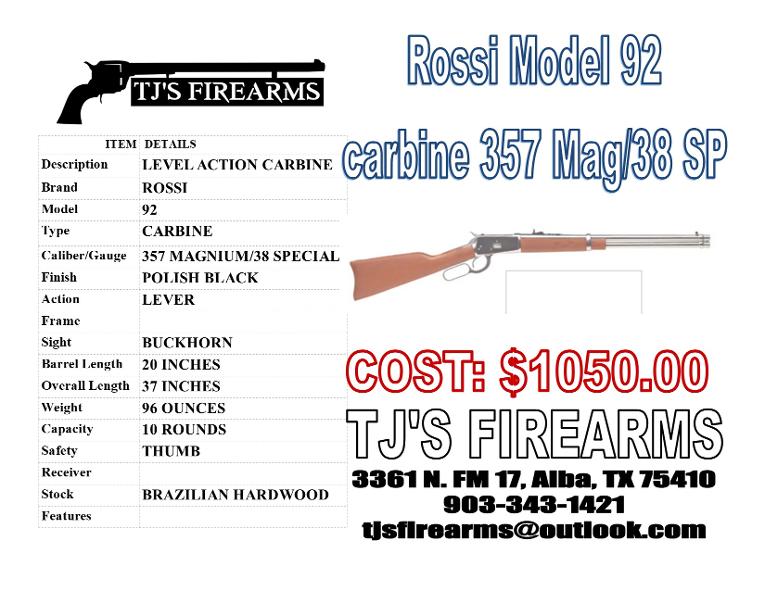
The Taurus acquisition in 1997 was initially met with concern from Rossi loyalists. Taurus had a mixed reputation in the 1990s, and some feared that the merger would dilute Rossi's quality. Those concerns proved largely unfounded. Taurus invested in modernizing Rossi's production lines, introducing CNC machining, robotic finishing, and stricter quality control protocols. The R92 lever-actions produced after 2010 are notably better-finished than their 1980s predecessors, with smoother actions and more consistent wood-to-metal fit.
Rossi's modern catalog is focused on its core strengths: lever-action rifles, revolvers, and the unique Circuit Judge platform. The company also produces a line of break-action shotguns for the hunting market and continues to support its legacy models with parts and service. While Rossi no longer competes in the tactical or striker-fired pistol markets (those segments are handled by Taurus proper), it remains the dominant player in the affordable lever-action market and continues to introduce new variations of its classic designs.
Rossi's enduring appeal is a testament to the wisdom of Amadeo Rossi's original vision. In a world of polymer-framed pistols, red-dot optics, and modular chassis rifles, there is still a massive market for wooden stocks, blued steel, and the satisfying mechanical feel of a lever-action cycling a fresh round into the chamber. Rossi has survived wars, economic collapses, corporate mergers, and changes in consumer taste precisely because it stayed true to what it does best: building classic designs that working people can afford and rely on.
Rossi is the great democratizer of lever-action rifles and revolvers. For 135 years, the company has made classic firearms accessible to people who would otherwise be priced out of the market. The R92 delivers the Winchester 1892 experience at half the cost. The Circuit Judge offers a level of versatility that no other production firearm can match. And the ranch revolvers carry on a tradition of affordable, reliable handguns that dates back to the 1930s.
For ranch owners, cowboy action competitors, homesteaders, and anyone who appreciates the mechanical beauty of a lever-action rifle without the collector-grade price tag, Rossi is essential. The company's legacy is not defined by innovation or prestige — it's defined by service to the working people who have trusted Rossi firearms to protect their families, feed their families, and accompany them through life for over a century.

RUGER
Believed to be one of the last true American companies left over from the first American industry, Sturm, Ruger & Co. is still 100-percent American owned as is as invested in its mission today as it was when it started. All Ruger products are still designed and built by Americans in American factories.
William B. Ruger Sr.’s dedication to the firearm industry thrives at Sturm, Ruger & Co.
It all started in 1938, when Ruger, then a student at the University of North Carolina, Chapel Hill, designed an innovative light machine gun for military use. In 1949, he entered into a partnership with Alexander McCormick Sturm, and with an original investment of only $50,000 founded Sturm, Ruger & Co. That same year the company introduced its first sporting firearm.
Sturm died in 1951, but Ruger insisted on keeping his memory alive in the company name. In 1953, Ruger developed a precision investment casting method that allowed his company to produce higher quality materials with greater precision and less waste. More than a half century later that process is still being used by the aerospace, golf and automotive industries.
By 2000, the company had manufactured more than 20 million firearms. Today it has factories in New Hampshire and Arizona, and its corporate offices are located in Connecticut.
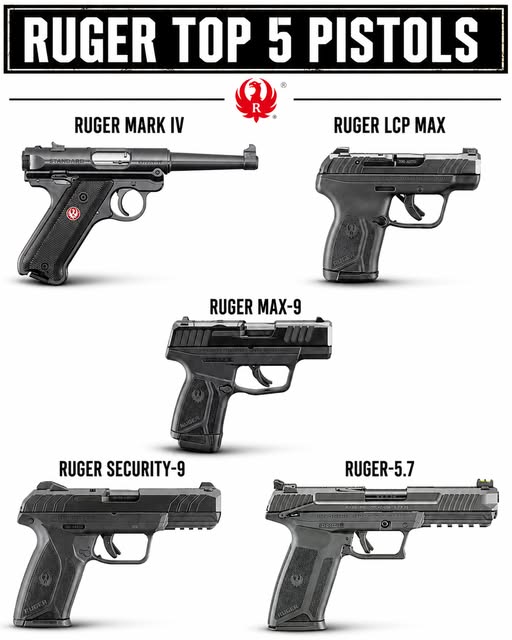
Ruger Mark IV pistol.
A major part of the company’s success is found in Ruger’s enduring philosophy that each of his products be built, “to a standard so I would want one even if it was made by our competitors.” Over time Ruger has maintained this philosophy, and the quality of its products, by staffing its factories and offices with shooters and hunters of all levels. After all, who better to make the product than those who believe in it. That fact is evident in some of Sturm, Ruger & Co.’s products—such as the Ruger 10/22 and the Mark IV pistol (one of two Ruger 2018 American Rifleman Golden Bullseye winners). Earlier this year it was announced that 18-time NRA Bianchi Cup Champion Doug Koenig would be joining the company as their shooting team captain.
Ruger believed in his philosophy and the sport so much that it is rumored he would tell management that taking time off to go hunting or shooting was okay, but if they took a day off to golf, they were fired. Because of this, the company still takes pride in the fact that its employees are connected with the customers and products.
Following these original thoughts and beliefs from Ruger, along with the quality of the products and rich history, it is clear how some in the company can consider Ruger to clearly be the last bastion of U.S. firearm manufacture.
Most Ruger histories stop around the 10/22. This one goes all the way to today — the founders, the mourning that turned the eagle black, the Marlin rescue, and the 2026 move out of Connecticut after three-quarters of a century.
In 1949, a Yale-trained painter and a self-taught gun designer pooled $50,000 and rented a small machine shop in Southport, Connecticut. Seventy-seven years later, the company they started builds more firearms than anyone else in America.
The full Ruger history is one of the great American manufacturing stories, and it’s still being written. Just in the past two years, Ruger has celebrated its 75th anniversary, launched a pistol co-designed with Magpul, handed the reins to a new CEO, and quietly moved its headquarters out of Connecticut after three-quarters of a century.
Most Ruger histories you’ll find online stop somewhere around the 10/22. This one goes all the way to today. We’ve sold Ruger firearms and magazines for over two decades, and the questions customers ask about the brand tend to be the same ones people type into Google: Who founded Ruger? Is it a German company? Why is the eagle in the logo black? Who owns it now?
Here’s the full story, start to present.
Ruger history at a glance
1949: Founded in Southport, Connecticut; the Ruger Standard .22 pistol launches
1951: Alexander Sturm dies at 28; the eagle logo changes from red to black
1953–1964: Single-Six, Blackhawk, Bearcat, and the 10/22 arrive
1969: Company goes public (joins the NYSE in 1990 as RGR)
1987: P85 9mm pistol debuts; Prescott, Arizona plant opens
2002: William B. Ruger dies after 53 years leading the company
2008–2015: LCP, American rifle, and Precision Rifle define the modern catalog
2020: Ruger buys Marlin Firearms out of the Remington bankruptcy
2024: 75th anniversary; the RXM pistol launches with Magpul
2026: Headquarters officially moves to Mayodan, North Carolina
Bill Ruger led the company for more than five decades, stepping back in 2000 and passing away in 2002 at age 86. By 2004, the company he co-founded in a rented shop had produced more than 20 million firearms, per American Rifleman’s company history. Leadership passed in turn to William Ruger Jr., Stephen Sanetti, Michael Fifer, and Chris Killoy, but the founder’s product philosophy never really left the building.
The 2000s brought a different market, and Ruger met it. The LCP, a pocket-sized .380 introduced in 2008, arrived just as concealed carry surged nationwide and became one of the most popular carry pistols in the country. The Ruger American rifle followed in 2011, bringing accurate, affordable bolt-actions to hunters, and the Ruger Precision Rifle in 2015 did the same for long-range shooting.
Then came the deal that defined the modern chapter of Ruger history.
When Remington Outdoor Company collapsed into bankruptcy in 2020, the fate of Marlin Firearms, the 150-year-old lever-action maker, was suddenly in question. Ruger stepped in and bought substantially all of Marlin’s assets for about $28.3 million in cash, per the company’s announcement, closing the deal on November 23, 2020.
What happened next won Ruger real goodwill. Rather than rushing product out the door, Ruger spent a year re-engineering Marlin’s lever guns and tooling up a dedicated line at its Mayodan, North Carolina plant. The first Ruger-made Marlin, a Model 1895 in .45-70, shipped in December 2021 to reviews that called it the best-built Marlin in years.
Enthusiasts who feared the brand would die in bankruptcy court instead watched it come back healthier. You’ll find lever-actions alongside bolt guns and semi-autos in our rifle selection, and the Marlin revival is a big reason lever guns are having a moment.
The Marlin deal capped a remarkable run. By ATF manufacturing data for 2022, Sturm, Ruger & Co. had become the largest firearm manufacturer in the United States, ahead of Smith & Wesson.
Ruger today: new leadership and a new home
Ruger marked its 75th anniversary in 2024 with nine commemorative models spanning the catalog, from the Mark IV to the 10/22. The anniversary year closed with a genuine surprise: the RXM, a 9mm pistol developed jointly with Magpul, launched in December 2024. Built around a removable stainless steel fire control insert that drops into interchangeable Magpul grip modules, the RXM pushed Ruger into the modular pistol market with one of the most respected accessory makers in the industry as a partner.
Who owns Ruger?
Sturm, Ruger & Co. is a publicly traded company listed on the New York Stock Exchange (NYSE: RGR). No parent company or private equity firm owns the Ruger firearms company; its shareholders do. The founding families no longer run the business. Day-to-day leadership rests with a professional management team and board.
As of January 1, 2026, Ruger’s corporate headquarters is in Mayodan, North Carolina. The company quietly relocated from Southport, Connecticut, its home since 1949, and confirmed the move publicly in May 2026, as reported by the Hartford Business Journal. Roughly 100 positions were cut in the restructuring, and a small office of about 20 finance and legal staff remains in Connecticut
What Ruger’s history means for shooters and collectors
For shooters, the takeaway is simple: the value DNA that built the company in 1949 is still the pitch in 2026. Today’s Ruger products, from the American rifle and Wrangler revolver to the 10/22 and RXM, all follow the same formula as that $37.50 Standard: solid engineering, honest materials, fair price.
Savage Arms
Savage Arms is an American gunmaker based in Westfield, Massachusetts, with operations in both the United States and Canada, Savage makes a variety of rimfire and centerfire rifles, as well as handguns and Stevens single-shot rifles and shotguns. The company is best known for the Model 99 lever-action rifle, no longer in production, and the .300 Savage. Savage was a subsidiary of Vista Outdoor until 2019 when it was spun off.
Savage Arms was founded in 1894 by Arthur Savage in Utica, New York. Within 20 years they were producing rifles, handguns, and ammunition. Savage introduced the first hammerless lever-action rifle, the Model 1895, derived from Arthur Savage's Model 1892 rifle that he had designed for Colt in a failed bid for a US Army rifle contract that instead was won by the Krag–Jørgensen design. The Model 1895 won a New York National Guard contract, but the contract was cancelled due to political controversy.[5]
Savage was one of six companies to participate in the United States Army trials for a .45 caliber semi-automatic pistol, and was named one of the two finalists before losing out to Colt's design, which would become the M1911 pistol. Savage marketed a series of .32 and .380 caliber pocket pistols, the Models 1907, 1915, and 1917 based on the same patents as their .45 caliber prototype.
The Savage company's founders didn't mess around, and their spirit of American, get-it done ingenuity has always been Savage Arms' driving force. All of our category-changing innovations have come from just such a place of principle. We're constantly looking ahead, finding new ways to leverage technology to push performance ever higher.
But we're not just a bunch of lab geeks, either. We're shooters. Hunters. Competitors. We know what makes or breaks a firearm's performance out there in the real world. And throughout the years, we've spent time listening to the best competitive shooters, sharing campfires with hunters and guides, and comparing notes with gun writers. That collaboration, that hands-on experience, has fueled the development of features and processes unlike any ever seen in gun manufacturing.
The results could not be clearer: Modern firearms stripped of pretense and gimmickry, leaving only muscular, no-nonsense engines of performance. Just like the people who use them. They're purposebuilt firearms that come out of the box bristling with special features you won't find from other manufacturers.
That's why holding a Savage in your hands is knowing what winning feels like. Whether you use them for recreational or competitive shooting, self-defense or hunting, every inch of our products is designed to give you an edge. What began with Arthur Savage back in 1894, continues stronger than ever today.
Savage Arms has been a cornerstone of the firearms industry since its founding in 1894 by Arthur Savage. From the introduction of revolutionary technologies to its unwavering commitment to quality and innovation, Savage Arms has left an indelible mark on the world of firearms. In this article, we’ll take a journey through the company’s history, exploring key milestones that have shaped its legacy.
The Beginnings: Arthur Savage and the Founding of Savage Arms
Arthur Savage, an inventor and visionary, founded Savage Arms in Utica, New York. Known for his mechanical expertise, Arthur set out to create firearms that were not only functional but also groundbreaking. His early designs quickly gained recognition for their reliability and precision.
One of his first major successes was the Savage Model 1895, the predecessor to the iconic Model 99. This lever-action rifle was one of the first to feature a hammerless design, setting a new standard for firearm innovation.
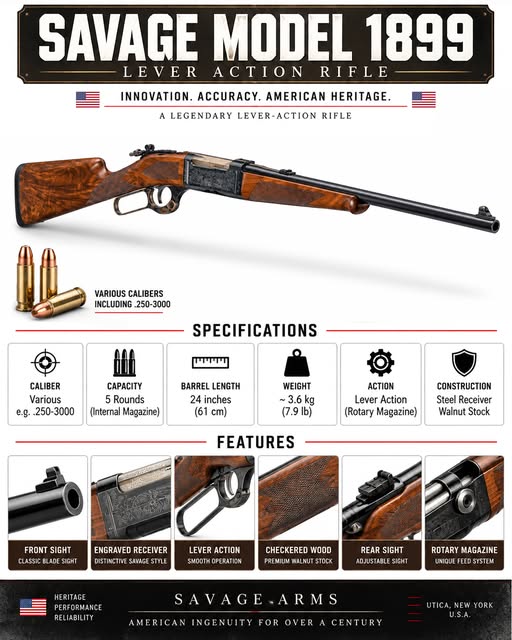
Introduced in 1899, the Model 99 became a flagship product for Savage Arms and remains one of the most celebrated rifles in history. This lever-action rifle was revolutionary for several reasons:
Hammerless Design: Its internal hammer made it safer and faster to operate.
Rotary Magazine: The Model 99 featured a rotary magazine with a visual round counter, a first in the industry.
Caliber Options: The rifle was available in a variety of calibers, making it versatile for hunters and shooters alike.
The Model 99’s reliability and innovative features made it a favorite among hunters and collectors, solidifying Savage Arms’ reputation for excellence.
During both World War I and World War II, Savage Arms played a pivotal role in supporting the Allied forces. The company manufactured thousands of rifles, machine guns, and other small arms, contributing significantly to the war effort. Savage Arms also produced the iconic Thompson submachine gun, commonly known as the "Tommy Gun."
Today, Savage Arms continues to innovate and lead in the firearms industry. The company’s diverse product lineup includes rifles, shotguns, and handguns, catering to hunters, sport shooters, and tactical users. Their commitment to quality, performance, and affordability ensures that Savage Arms remains a trusted name for generations to come.
From the iconic Model 99 to the cutting-edge AccuTrigger and AccuFit systems, Savage Arms has consistently pushed the boundaries of what’s possible in firearm design. As they continue to innovate, one thing remains clear: Savage Arms is dedicated to empowering shooters with the tools they need to excel.
Explore Savage Arms
Ready to experience the legacy of Savage Arms? Visit Gunstores.com to browse their wide selection of Savage firearms and find the perfect fit for your needs. Whether you’re a seasoned hunter or a first-time shooter, Savage Arms has a firearm designed for you.


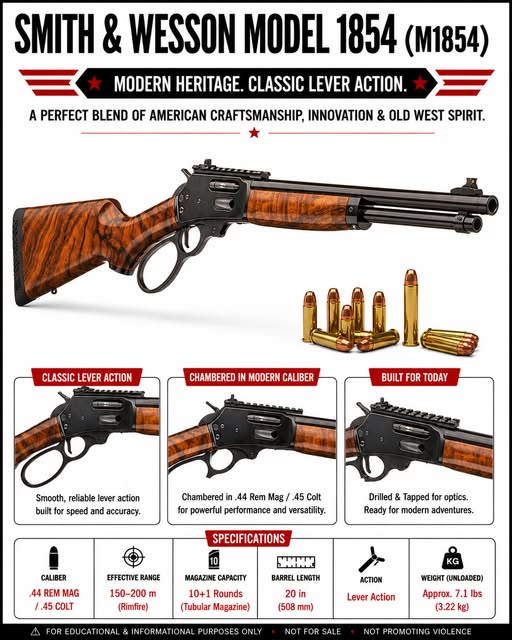
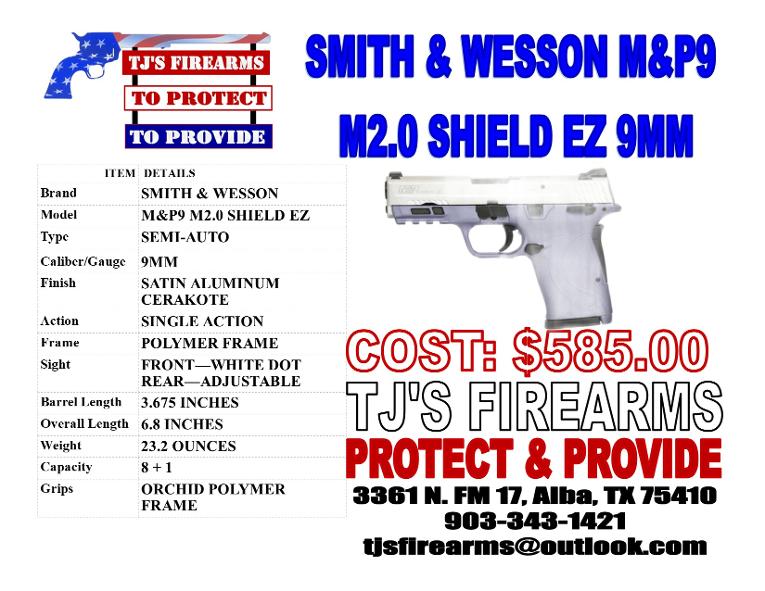
THE NAME BEHIND 170 YEARS OF AMERICAN FIREARMS
Smith & Wesson is not merely a firearms manufacturer. It is an institution — a company whose products have appeared at pivotal moments in American history, whose revolvers defined the frontier era, whose semi-automatic pistols equipped generations of law enforcement officers, and whose M&P series now competes at the highest levels of the duty and concealed carry market.
Founded in 1852, Smith & Wesson has survived wars, economic depressions, ownership changes, and the relentless pressure of competition from newer, more agile manufacturers. It has done so by repeatedly reinventing itself — by recognizing when the market was moving and developing products that met the new demand. The result is a company that has been relevant in every era of American firearms history and remains relevant today.
This is the story of how Smith & Wesson got from a small Springfield, Massachusetts workshop to one of the most recognized firearms brands in the world — and the products that carried it there.
The Founding: Horace Smith, Daniel Wesson, and the Lever-Action Pistol (1852–1856)
Two Gunsmiths with a Vision
Horace Smith and Daniel B. Wesson first partnered in 1852 in Norwich, Connecticut, to develop a lever-action repeating pistol that used a self-contained metallic cartridge — a concept that was revolutionary at a time when most firearms still used loose powder and ball. Their Volcanic pistol, as it came to be known, was an early attempt at a magazine-fed repeating firearm that anticipated the lever-action rifles that would define the American West.
The M&P Revolution: Military & Police Reimagined (2005–Present)
The Original M&P: A Platform Built for Professionals
The Military & Police — M&P — series, introduced in 2005, was Smith & Wesson's most significant product development since the .357 Magnum. Rather than iterating on the Sigma's failed formula, the M&P was designed from the ground up to address the specific needs of law enforcement and military users: ergonomics that fit a wide range of hand sizes, a trigger that was better than the Sigma's without requiring the manual safety manipulation of the 1911, and a modular design that allowed the grip to be customized with interchangeable backstraps.
The M&P's striker-fired trigger offered a consistent pull that was significantly better than the Sigma's — not as light as a Glock's, but more consistent and with a cleaner reset. The interchangeable backstrap system — three sizes included with each pistol — allowed the grip to be fitted to individual hand sizes, addressing one of the Glock's ergonomic limitations.
The M&P was adopted by numerous law enforcement agencies and achieved the institutional credibility that the Sigma never did. It established Smith & Wesson as a genuine competitor in the striker-fired polymer pistol market that Glock had dominated since the 1980s.
The M&P Shield: Redefining Concealed Carry
The M&P Shield, introduced in 2012, applied the M&P platform's design philosophy to the concealed carry market. The Shield was a single-stack, slim-profile 9mm (and later .40 S&W and .45 ACP) pistol designed specifically for concealed carry — thinner than the full-size M&P, lighter, and more concealable while retaining the M&P's trigger quality and reliability.
The Shield became one of the best-selling pistols in the United States within its first year of availability and remained a top seller for years afterward. Its combination of slim profile, adequate capacity (7+1 or 8+1 in 9mm), and M&P-quality trigger at a competitive price point made it the default recommendation for new concealed carriers for much of the 2010s.
The M&P M2.0: Addressing the Critics
The M&P M2.0, introduced in 2017, addressed the primary criticism of the original M&P: its trigger. The M2.0's trigger featured a shorter reset, crisper break, and reduced overtravel compared to the original — improvements that brought the M&P's trigger quality closer to the Glock's and addressed the feedback that had prevented some law enforcement agencies from adopting the original platform.
The M2.0 also featured an aggressive grip texture that improved control under recoil, a flared magwell for faster reloads, and updated ergonomics. The M2.0 revitalized the M&P line and drove new law enforcement adoptions, including several agencies that had previously chosen Glock.
The Ownership Changes: From S&W to American Outdoor Brands to Smith & Wesson Brands
Smith & Wesson's corporate history is as eventful as its product history. The company was acquired by Bangor Punta Corporation in 1965, sold to Lear Siegler in 1984, and acquired by Tomkins PLC (a British conglomerate) in 1987. Tomkins sold Smith & Wesson to Saf-T-Hammer Corporation in 2001, which renamed itself Smith & Wesson Holding Corporation.
In 2016, Smith & Wesson Holding Corporation acquired Battenfeld Technologies and rebranded as American Outdoor Brands Corporation — a diversified outdoor products company that included Smith & Wesson firearms alongside hunting, shooting sports, and outdoor accessories brands. In 2020, the company split into two separate publicly traded entities: Smith & Wesson Brands, Inc. (the firearms business) and American Outdoor Brands, Inc. (the accessories and outdoor products business).
Through all these ownership changes, the Smith & Wesson brand and its Springfield, Massachusetts manufacturing operations remained continuous — a testament to the brand's enduring value and the institutional knowledge embedded in its workforce.
Smith & Wesson Today: 170 Years of Relevance
What Makes Smith & Wesson Different
Smith & Wesson's 170-year history reveals a consistent pattern: the company has survived by recognizing when the market was changing and developing products that met the new demand, even when that meant abandoning successful product lines. The transition from revolvers to semi-automatics, from DA/SA triggers to striker-fired, from all-metal frames to polymer — each transition required Smith & Wesson to cannibalize existing products in favor of new ones.
The companies that failed to make these transitions — that clung to successful products while the market moved — are no longer significant players. Smith & Wesson made the transitions, sometimes imperfectly (the Sigma), sometimes brilliantly (the M&P), but always with the institutional commitment to remain relevant.
The M&P Ecosystem Today
Today, the M&P series is Smith & Wesson's primary competitive platform in the duty and concealed carry markets. The M&P M2.0 competes directly with the Glock 17/19 for law enforcement contracts; the M&P Shield Plus competes with the SIG P365 in the micro-compact carry market; the M&P Shield EZ serves the accessibility-focused segment that no other major manufacturer has addressed as directly.
The M&P ecosystem's breadth — from the full-size M2.0 to the compact Shield to the micro-compact Shield Plus to the accessible Shield EZ — allows Smith & Wesson to serve virtually every segment of the defensive pistol market with a consistent platform family.
Carrying a Smith & Wesson: The Complete System
A Smith & Wesson M&P pistol is the foundation of a defensive carry system — but the system requires a weapon light for low-light identification and a holster designed for the specific pistol-plus-light combination. WARRIORLAND's M&P-compatible lineup provides the carry infrastructure for the most popular S&W platforms:
Conclusion: 170 Years of Getting Back Up
Smith & Wesson's history is not a story of unbroken success. It's a story of a company that has faced existential challenges — the expiration of the Rollin White patent, the Glock's disruption of the revolver market, the Sigma's commercial failure, the political controversies of the early 2000s — and found ways to survive and remain relevant.
The M&P series is the current expression of that resilience: a platform that learned from the Sigma's failures, addressed the Glock's ergonomic limitations, and built a product family that serves the full range of defensive carry needs. It's not perfect — no platform is — but it represents Smith & Wesson at its best: a company that understands what shooters need and builds products to meet that need.
For carriers who choose Smith & Wesson, WARRIORLAND's M&P-compatible carry solutions — from the MA2 light-equipped holster combo for the M&P M2.0 to the Shield family IWB holsters — provide the carry infrastructure that 170 years of Smith & Wesson engineering deserves. Build the complete system. Carry with confidence.
The Winchester Rifle
In 1866 Benjamin Henry, angered over what he believed was inadequate compensation, attempted to have the Connecticut legislature award ownership of New Haven Arms to him. Oliver Winchester, hastening back from Europe, forestalled the move and reorganized New Haven Arms yet again as the Winchester Repeating Arms Company on July 1, 1866. Winchester had the basic design of the Henry rifle completely modified and improved to become the first Winchester rifle, the Model 1866, which fired the same .44 caliber rimfire cartridges as the Henry but had an improved magazine (with the addition of a loading gate on the right side of the receiver, invented by Winchester employee Nelson King) and, for the first time, a wooden forearm. The Henry and the 1866 Winchester shared a unique double firing pin which struck the head of the rimfire cartridge in two places when the weapon was fired, increasing the chances that the fulminate in the hollow rim would ignite the 28 or so grains of black powder inside the case.
Another extremely popular model was rolled out in 1873. The Model 1873 introduced the first Winchester center fire cartridge, the .44-40 WCF (Winchester Center Fire). These rifle families are commonly known as the “Gun That Won the West.” The Colts Patent Firearms Company introduced their first cartridge firearm the same year. This gun, the Model 1873 “Single Action Army” revolver was also initially chambered for the .44 caliber rimfire cartridge as well as the .44-40 WCF which provided interchangeability between Winchester’s long arm and Colts side arm. The Model 1873 was followed by the Model 1876 (or “Centennial Model”), a larger version of the ’73, which used the same toggle-link action and brass cartridge elevator used in the Henry. It was chambered for longer, more powerful cartridges such as .45-60 WCF, .45-75 WCF, and .50-95 WCF. The action was not long enough to allow Winchester to achieve their goal of producing a repeating rifle capable of handling the .45-70 Government cartridge; this would not happen until they began manufacture of the Browning-designed Model 1886.
REPEATING_RIFLE
Oliver Winchester died in December 1880; his son and successor, William Wirt Winchester, died of tuberculosis four months later. From 1883, John Browning worked in partnership with the Winchester Repeating Arms Company and designed a series of rifles and shotguns, most notably the Winchester Model 1885 Single Shot, Winchester Model 1887 lever-action shotgun, Model 1897 pump-action shotgun; and the lever-action Model 1886, Model 1892, Model 1894 and Model 1895 rifles. Several of these are still in production today through companies such as Browning, Rossi, Navy Arms and others which have revived several of the discontinued models or produced reproductions.
Winchester Turn of the Twentieth Century
The early years of the twentieth century found the Winchester Repeating Arms Company competing with new John Browning designs, manufactured under license by other firearm companies. The race to produce the first commercial self-loading rifle brought forth the .22 rimfire Winchester Model 1903 and later centerfire Model 1905, Model 1907, and Model 1910 rifles. Winchester engineers, after ten years of work, designed the Model 1911 to circumvent Browning’s self-loading shotgun patents, prepared by the company’s very own patent lawyers. One of Winchester’s premier engineers, T.C. Johnson, was instrumental in the development of these self-loading firearms and went on to superintend the designs of Winchester’s classic Model 1912, Model 52 and Model 54.
The First World War
The company was a major producer of the .303 Pattern 1914 Enfield rifle for the British Government and the similar .30-06 M1917 Enfield rifle for the United States during World War I. Working at the Winchester plant during that war, Browning developed the final design of the Browning Automatic Rifle (BAR), of which it produced some 27,000. Browning and the Winchester engineers also developed the Browning .50 caliber machine gun during the war. The caliber .50 BMG (12.7 x 99 mm) ammunition for it was designed by the Winchester ballistic engineers. The commercial rights to these new Browning guns were owned by Colt.
Failure and Recovery
During the war Winchester had borrowed heavily to finance its massive expansion. With the return of peace, the company attempted to use its surplus production capacity, and pay down its debt, by trying to become a general manufacturer of consumer goods: everything from kitchen knives to roller skates to refrigerators, to be marketed through “Winchester Stores.” They merged with the Simmons Hardware Company. The Winchester and Keen Kutter brands did business together during the 1920s but in 1929 they agreed to separate and returned to their core business. The strategy was a failure for Winchester, and the Great Depression put the final nail in the company’s coffin. Winchester Repeating Arms Company went into receivership in 1931, and was bought at bankruptcy auction by the Olin family’s Western Cartridge Company on December 22 of that year. Oliver Winchester’s firm would maintain a nominal existence until 1935, when Western Cartridge merged with its subsidiary to form Winchester-Western Company; in 1944 the firearms and ammunition operations would be reorganized as the Winchester-Western Division of Olin Industries.
Fortunately for Winchester, Western’s First Vice-President John M. Olin was a sportsman and gun enthusiast, and he started at once to restore the brand to its former luster by concentrating on its classic models and updated versions thereof, with particular attention to quality and prestige. Olin personally pushed the deluxe Model 52 Sporter and the semi-custom Model 21 double-barreled shotgun. Winchester flourished, even during the later Depression.
The Second World War
The U.S. M1 carbine (technically not a carbine in the sense of a short version of a parent rifle) was designed at Winchester by an eight man team including Edwin Pugsley, Bill Roemer, Marsh Williams, Fred Humiston, Cliff Warner and Ralph Clarkson, although the popular press played up the role of ex-convict Williams. More M1 carbines (818,059 units) were manufactured by Winchester and other firms than any other U.S. small arm of World War II. During World War II, Winchester produced the M1 Garand rifle (513,880 units) and post-war was the first civilian manufacturer of the M14 rifle.
By the 1960s the rising cost of skilled labor was making it increasingly unprofitable to produce Winchester’s classic designs, as they required considerable hand-work to finish. In particular, Winchester’s flagship Model 12 pump shotgun and Model 70 bolt-action rifle with their machined forgings could no longer compete in price with Remington’s cast-and-stamped 870 and 700. Accordingly S. K. Janson formed a new Winchester design group to advance the use of “modern” engineering design methods and manufacturing principles in gun design. The result was a new line of guns which replaced most of the older products in 1963–1964. The immediate reaction of the shooting press and public was overwhelmingly negative: the popular verdict was that Winchester had sacrificed quality to the “cheapness experts,” and Winchester was no longer considered to be a prestige brand, causing a marked loss of market share. To this day, gun collectors consider “post-64” Winchesters to be both less desirable and less valuable than their predecessors.
In the early 70’s the Olin Winchester-Western Division tried to diversify with at least two unsuccessful attempts. The first was an experimental indoor shooting range called Wingo in San Diego, California. This short lived attempt had a strong tie to firearms and ammunition with exclusive guns, ammo and target launching machines being produced. The flaw was to see it quickly profitable in a western city with too many competing outdoor activities. The second venture was trying to compete with Coleman Company in the camping and sporting goods market. “Trailblazer by Winchester” products included propane fueled stoves and lanterns. They also produced tents and sleeping bags. These products struggled to compete with similar offerings from an established company founded in 1900.
Labor costs continued to rise through the 1960s and ’70s, and a prolonged and bitter strike in 1979–1980 ultimately convinced Olin that firearms could no longer be produced profitably in New Haven. In December 1980 the New Haven plant was sold to its employees, incorporated as the U.S. Repeating Arms Company, and granted a license to make Winchester arms. Olin retained the Winchester ammunition business. U.S. Repeating Arms itself went bankrupt in 1989. After bankruptcy it was acquired by a French holding company, then sold to Belgian arms makers Herstal Group, which also owns gun makers Fabrique Nationale d’Herstal (FN) and Browning Arms Company.
On January 16, 2006 U.S. Repeating Arms announced it was closing its New Haven plant where Winchester rifles and shotguns had been produced for 140 years. Along with the closing of the plant, production of the Model 94 rifle (the descendant of the original Winchester rifle), Model 70 rifle and Model 1300 shotgun were discontinued.
Revival
On August 15, 2006, Olin Corporation, owner of the Winchester trademarks, announced that it had entered into a new license agreement with Browning to make Winchester brand rifles and shotguns, though not at the closed Winchester plant in New Haven. The production of Model 1885 falling block action, Model 1892 and Model 1886 lever action rifles are produced under licensed agreement by Miroku Corp. of Japan and imported back to United States by Browning.
In 2008 Fabrique Nationale announced that it would produce Model 70 rifles at its plant in Columbia, SC. In the summer of 2010 Fabrique Nationale d’Herstal (FN) resumed production of the Winchester model 1894 and the evolution of the Winchester 1300, now called the Winchester SXP. A number of gun cleaning kits, Chinese folding knives, tools, and other accessories are also now sold under the Winchester trademark.
Ammunition
Winchester’s success was founded on a cartridge, the .44 Henry rimfire, and the Henry and 1866 rifles designed for it. Winchester was a leading designer of rifle ammunition throughout its existence, and has been responsible for some of the most successful cartridges ever introduced, including the .44-40 WCF (Winchester Center Fire), the .30 WCF (.30-30), the .50 BMG, the .270 Winchester, the .308 Winchester, the .243 Winchester, the .22 WMR (.22 Magnum), and the .300 Winchester Magnum. In North America the .30-30 is the best-selling hunting cartridge in history; and the .308, the commercial version of the military 7.62x51mm NATO, is not far behind, and one of the most popular hunting cartridges in the world.
Olin Corporation continues to manufacture Winchester ammunition (the cartridge business was not sold to U.S. Repeating Arms) in several lines including Super-X, Supreme and Supreme Elite, AA and Super Target shotshells, and Winchester Cowboy Loads revolver cartridges.
Presidents of Early Years
Oliver Winchester (1857–1880)
William Wirt Winchester (1880–1881), son of Oliver Winchester.
William Converse (1881–1890), husband of Mary A. Pardee.
Thomas Gray Bennett (1890–1910), husband of Hannah Jane Winchester.
George E. Hudson (1910–1915). He was a partner in the company with Oliver.
Winchester Bennett (1915–1918), son of Thomas Gray Bennett.
Thomas Gray Bennett (1918–1919), father of Winchester Bennett.
John E. Otterson (1919-1924)

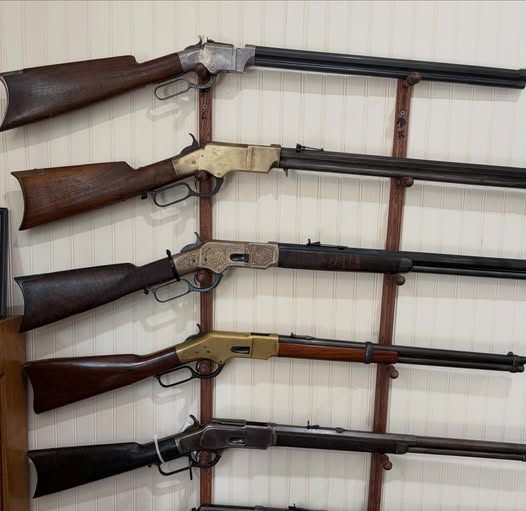
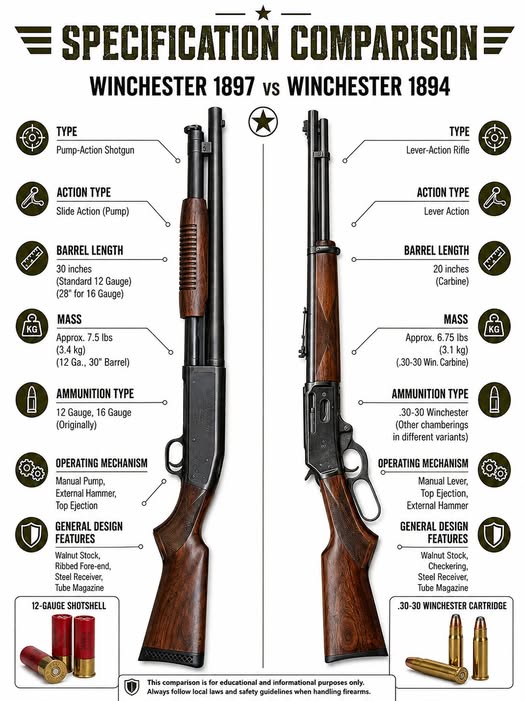
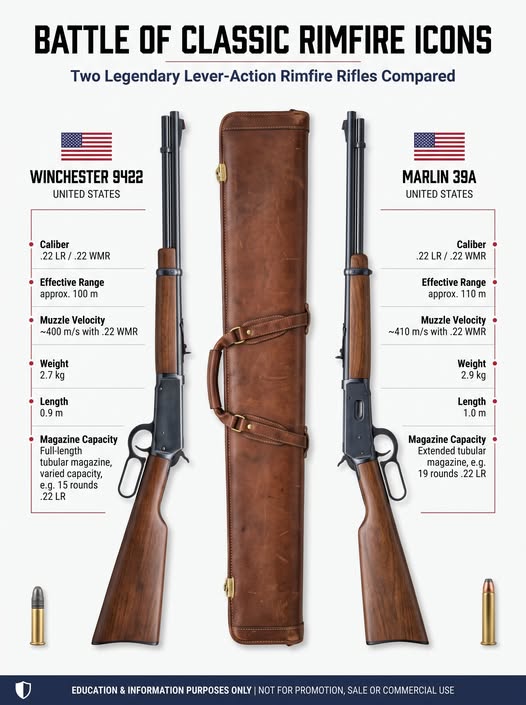
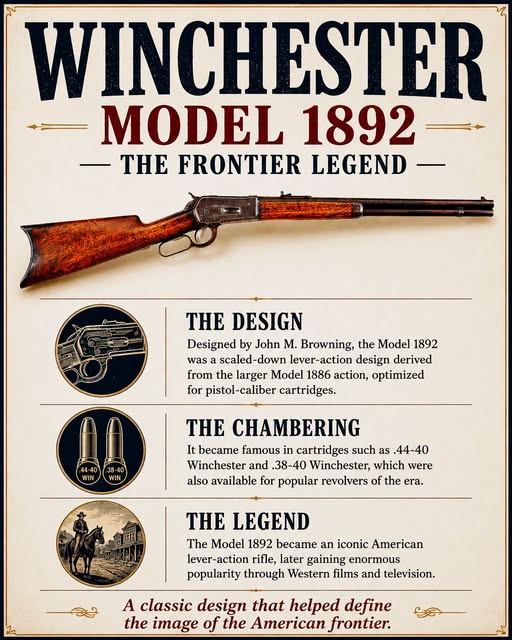

Springfield Armory, Inc.
Springfield Armory, Inc., is an American commercial firearms manufacturer and importer based in Geneseo, Illinois. Founded in 1974 by Bob Reese and family, the company produces rifles such as the M1A and imports handguns such as the XD series and Hellcat. The company is unrelated to the like-named former manufacturer of US military firearms in Massachusetts, Springfield Armory.
Formation
Elmer C. Ballance began using the name "Springfield Armory" through his company (LH Manufacturing) dedicated to the first civilian production of the M14 rifle, calling it the M1A. Ballance began in San Antonio, Texas, and soon after moved to Devine, Texas, where the company gained momentum and popularity. In 1974, Ballance sold the company to the Reese family, who had a well-established production shop in Illinois and experience base. The company then expanded its market into other firearms, including the M1911. After further success, the company began to branch into even more types of firearms. The company, now run by Dennis Reese (formerly along with his brother Tom Reese), produces numerous firearms in many styles and models, ranging from the AR-pattern SAINT rifles and pistols, to the M1A family, to a wide range of 1911s, to the compact 911 .380 and 9mm pistols, and also a broad selection of polymer-framed pistols. The latter group includes the micro 9mm Hellcat, released in September 2019, which has proven to be popular in the CCW market.
The company has previously (as late as 2017) used a motto, "The First Name in American Firearms", in reference to the original and operationally unrelated Springfield Armory of Springfield, Massachusetts, which was founded in 1777 and closed in 1968.[2] Those two dates are included in a timeline on the company's website, which notes that in 1974 "a passionate family by the name of Reese rescued" the Springfield Armory name.
PRODUCTS
Rifles
A SOCOM variant of the M1A
The company's rifle offerings include the M1A, the Hellion (imported VHS-2), and the SAINT line of AR-15 style rifles and short-barreled rifles.
The M1A line includes offerings such as standard, loaded, SOCOM, national match, and tanker models. In 2016, the first SAINT rifle was introduced,[4] with a pistol variant following a year later. Variants at different price-points, marketed as SAINT Victor and SAINT Edge, have also been added.
In 2020, they released the all-new Model 2020 Waypoint hunting rifle.
In 2022, Springfield announced they would be importing a civilian version of the HS Produkt VHS-2 under the name of the Springfield Hellion.[7]
Previously, the company offered its own versions of the M1 Garand,[8] Beretta BM59,[8] FN FAL, HK 91[9] and M6 Scout.[10]
Handguns
A compact XD chambered in .45 ACP with 13-round magazine
The company's handgun offerings include M1911 pistols, the 911 pistol, and the polymer-frame XD
(X-treme Duty) pistol series. The M1911 line includes the Range Officer series, the EMP, Mil-Spec, Garrison, TRP, Ronin and Emissary versions.
The XD-M variant was added in 2007, and the compact concealed carry XD-S line was added in 2012. Second generation XD offerings, branded as XD Mod.2, were introduced in 2014. The XD-E, a variant with an exposed hammer and a double action / single action (DA/SA) trigger system, followed in 2017.[citation needed] In 2018, the XD-S Mod.2, a modernized and upgraded version of the original XD-S, was introduced. In 2019, the company introduced the XD-M Elite line of pistols, which takes the XD-M and adds features such as the META (Match Enhanced Trigger Assembly), extended magazine wells and capacities up to 22 rounds in 9mm, ambidextrous slide locks, and enhanced slide grasping grooves.
In 2018, the company introduced the 911 pistol.[11] The Hellcat micro-compact pistol was introduced in 2019, featuring 11- and 13-round magazines.
In 2021, the company introduced the SA-35 pistol, which is their version of the Browning Hi-Power.
In 2022, the company introduced the 1911 Prodigy DS.
In 2023, the company introduced the Echelon 9mm pistol.
In 2025, the company introduced the Kuna, a 9mm carbine featuring a roller-delayed blowback operating system. The gun is imported from the Croatian manufacturer HS Produkt.
Colt's Manufacturing Company, LLC
Colt's Manufacturing Company, LLC (CMC, formerly Colt's Patent Firearms Manufacturing Company) is an American firearms manufacturer, founded in 1855 by Samuel Colt that has become a subsidiary of Czech holding company Colt CZ Group. It is the successor corporation to Colt's earlier firearms-making efforts, which started in 1836. Colt is known for the engineering, production, and marketing of firearms, especially during the century from 1850 through World War I, when it dominated its industry and was a seminal influence on manufacturing technology. Colt's earliest designs played a major role in the popularization of the revolver and the shift away from single-shot pistols. Although Samuel Colt did not invent the revolver, his designs resulted in the first very successful model.
The most famous Colt products include the Colt Walker, made in 1847 in the facilities of Eli Whitney Jr., the Colt Single Action Army, the Colt Python, and the Colt M1911 pistol, which is the longest-standing military and law enforcement service handgun in the world and is still used. Though they did not develop it, for a long time Colt was also primarily responsible for all AR-15 and M16 rifle production, as well as many derivatives of those firearms. The most successful and famous of these are numerous M16 carbines, including the Colt Commando family, and the M4 carbine.
In 2002, Colt Defense was split off from Colt's Manufacturing Company. Colt's Manufacturing Company served the civilian market, while Colt Defense served the law enforcement, military, and private security markets worldwide. The two companies remained in the same West Hartford, Connecticut location cross-licensing certain merchandise before reuniting in 2013. Following the loss of its M4 contract in 2013, the reunited Colt was briefly in Chapter 11 bankruptcy, starting in 2015 and emerging in January 2016. The company was bought by Česká zbrojovka Group in 2021. In April 2022, Česká zbrojovka Group announced it had changed its name to Colt CZ Group.
In April 2026, Colt announced that Jillair Kubish has been appointed President and Chief Executive Officer, effective April 1, 2026, following approval by the Colt CZ Group North America Board of Directors.
Samuel Colt (1855–1862)[56]
Elisha K. Root (1862–1865)[56]
Richard Jarvis (1865–1901)[56]
John Hall (1901–1902)[56]
Lewis C. Grover (1902–1909)[56]
William C. Skinner (1909–1911)[56]
Col. Charles L.F. Robinson (1911–1916)[56]
William C. Skinner (1916–1921)[56]
Samuel M. Stone (1921–1944)[56]
Graham H. Anthony (1944–1949)[56]
- Franklin Conner (1949–1955)[56]
Chester Bland (1955–1958)[56]
Fred A. Roff Jr. (1958–1962)[56]
David C. Scott (1962–1963)[56]
Paul A. Benke (1963–1968)[56]
David I. Margolis (1968–1990)[80][81]
Richard F. Gamble (1990) [82]
Ronald E. Stilwell (1990–1992) [83]
Ronald C. Whitaker (1992–1995) [84]
John F. Jastrem (1995–1996)
Donald Zilkha (1996)
Ronald L. Stewart (1996–1999)
Steven Sliwa (1999)
William M. Keys (1999–2013)
Dennis R. Veilleux (2013–2025)
Jillair Kubish (2026–Present)
Handguns
The years in parentheses indicate the year when production started, not the year of the model's patent.
Percussion revolvers
Colt Paterson (1836)
Colt Walker (1847)
Colt Dragoon (1848)
Colt Model 1849 Pocket Revolver (1849)
Colt 1851 Navy (1851)
Colt 1855 Sidehammer (1855)
Colt 1860 Army (1860)
Colt 1861 Navy (1861)
Colt Model 1862 Pocket Police (1862)
Metallic cartridge revolvers
Colt Anaconda .44 Magnum
Colt House (1871)
Colt Open Top Pocket Model Revolver (1871)
Colt Model 1871-72 Open Top (1872)
Colt Single Action Army "Peacemaker" (1873)
Colt New Line (1873)
Colt Lightning, Thunderer and Rainmaker (1877)
Colt Model 1878 Frontier (1878)
Colt M1889 (1889)
Colt M1892 (1892 to 1903)
Colt New Police Revolver (1896–1905)
Colt New Service (1898)
Colt M1905 New Marine
Colt M1917
Colt Anaconda (AA frame)
Colt Police Positive (D frame)
Colt Police Positive Special / Viper (D frame)
Colt Detective Special (D frame)
Colt Cobra (D frame)
Colt Diamondback (D frame)
Colt Official Police revolver
Colt SF VI
Colt Python (I frame)
Colt Trooper (I frame)
Colt King Cobra (V frame)
Semi-automatic pistols
Colt Mustang .380 ACP
Colt Target Model .22 LR
Colt M1900 (1900)
Colt M1902 (1902)
Colt Model 1903 Pocket Hammer
Colt Model 1903 Pocket Hammerless (Model M, 1903)
Colt Model 1908 Vest Pocket (Model N, 1908)
Colt M1911 (Model O, 1911)
Colt M1911A1
Colt 2000
Colt Cadet 22
Colt Target Model 22
Colt Mustang
Colt Mustang Plus II
Colt Mustang XSP
Colt Delta Elite
Colt Double Eagle
Colt New Agent
Colt Officer's ACP
Colt Woodsman (Model S)
Colt T-4 (prototype)
Colt Commander
Colt DefenderMachine pistols
Colt SCAMP
Long guns
M4 Carbine
Colt 1855 Revolving carbine/rifle
Colt 1878 Hammer Shotgun[89]
Colt-Burgess rifle
Colt–Browning M1895 machine gun
Colt Lightning Carbine
Colt Stagecoach .22 LR semi-automatic rifle
Colt ACR
Colt Double rifle
ArmaLite AR-15 type rifles
Colt Monitor – produced under license
Thompson SMG – produced under license
Cartridges
.25 ACP
.32 ACP
.32 Short Colt
.32 Long Colt
.38 ACP
.38 Super
.380 ACP
.38 Short Colt
.38 Long Colt
.41 Long Colt
.44 Colt
.45 ACP
.45 Colt

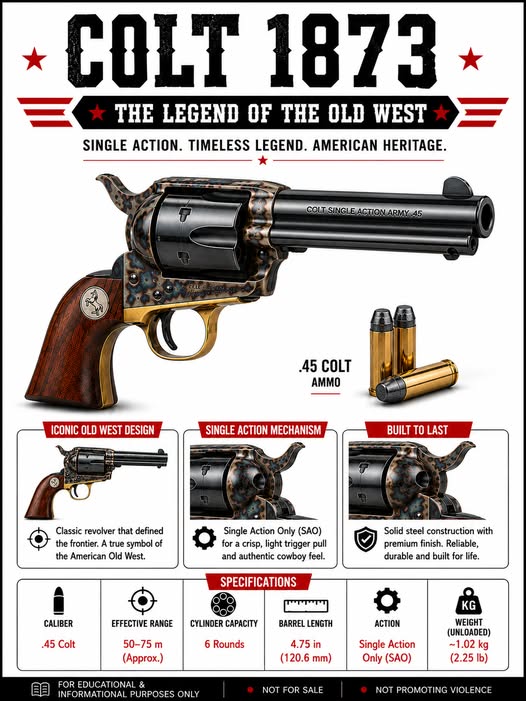
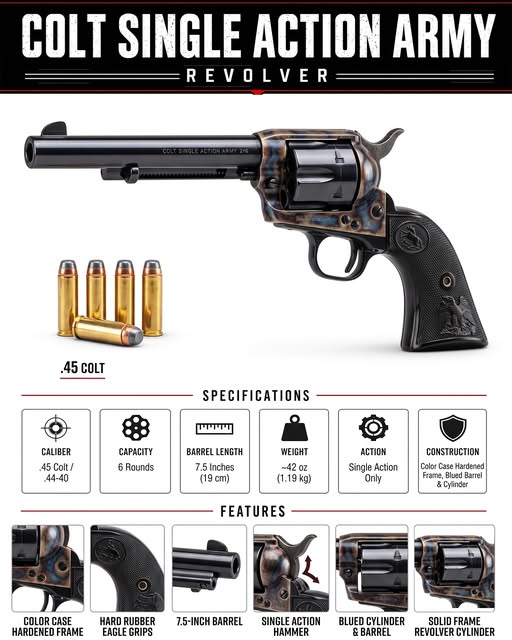
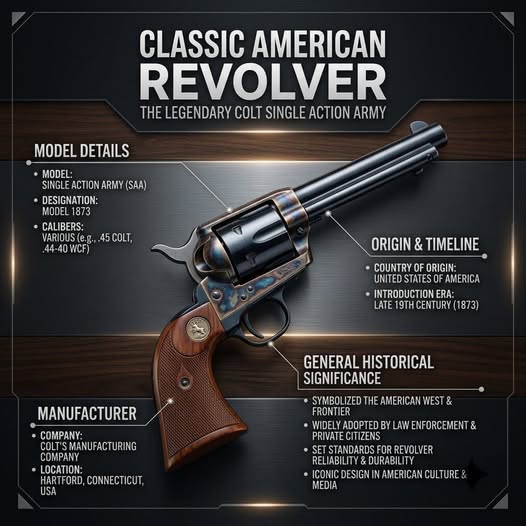

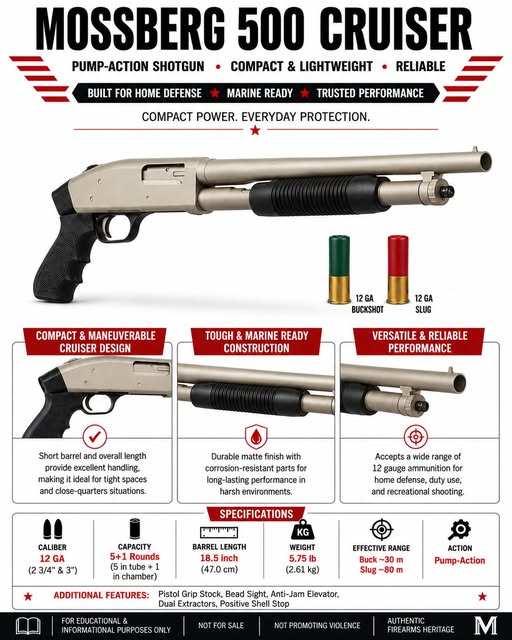
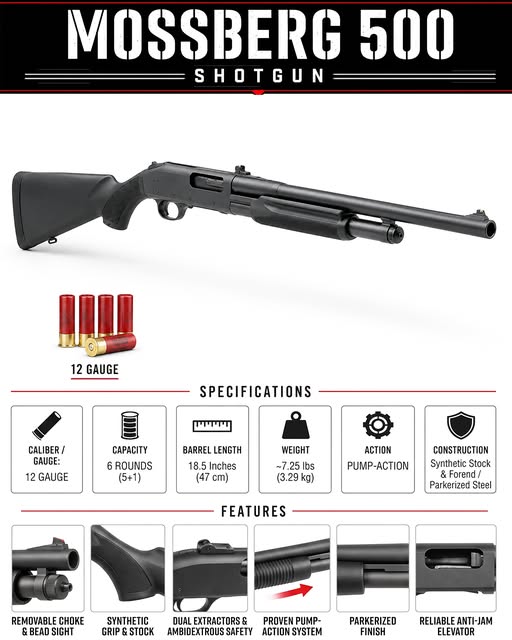
O.F. Mossberg & Sons
Founded March 1919; 107 years ago[1]
Founder Oscar Frederick Mossberg and his sons F. Mossberg & Sons (commonly known as Mossberg) is an American firearms manufacturer, specializing in shotguns, rifles, scopes, and pistol accessories.
Oscar Frederick Mossberg (1866–1937) was born on 1 September 1866, in Sweden, near the village of Svanskog in Värmland, and emigrated to the United States in 1886. Mossberg went to work at the Iver Johnson Arms & Cycle Works in Fitchburg, Massachusetts. While at Iver Johnson, Mossberg supervised the manufacture of revolvers and shotguns while contributing some of his own patented designs, including a top strap latching mechanism for the Iver Johnson safety revolver. When Mossberg left Iver Johnson, he went on to manage the small factory of the C. S. Shattuck Arms Co. in nearby Hatfield, Massachusetts, which manufactured single- and double-barrel breechloading shotguns. From there, he went to work for J. Stevens Arms & Tool Co., where he designed a small four-shot novelty pistol which he patented in his name. Working out of an old barn behind his house, Mossberg and his sons made about 500 of these four-shot pistols between 1907 and 1909. In 1914, Mossberg left Stevens, moving to New Haven, Connecticut, in order to work for Marlin-Rockwell. In 1919, when Marlin-Rockwell went out of business (they primarily made machineguns, and World War I had just ended), the unemployed 53-year-old O.F. Mossberg and his two sons, Iver and Harold, started a new firearms company of their own, O. F. Mossberg & Sons. Renting a small loft on State Street in New Haven, the Mossbergs began work on a simple four-shot .22-caliber pocket pistol, the Brownie. Marketed largely to hunters and trappers for the humane killing of wounded or trapped animals, Mossberg produced approximately 37,000 Brownie pistols from 1920 to 1932.
Connecticut production
Thanks to the Brownie pistol, the Mossbergs' firearms business grew steadily, and in 1921 the company purchased a building on Greene Street in New Haven, Connecticut. In 1922, the company introduced the first of a new line of .22 rimfire Mossberg rifles, a pump-action repeater designed by Arthur E. Savage, the son of the owner of Savage Arms Corp.
After building a third factory in New Haven in 1937, Mossberg continued to produce simple, economic firearms for the civilian market. O.F. Mossberg died in 1937, and the business continued under his son Harold.
During World War II, the company made parts for Browning M2 .50-caliber heavy machine gun and for the Enfield No. 4 rifle under contract, as well as the U.S. Model 42 and Model 44 .22 caliber bolt-action rifle, which was used for preliminary small arms training for the Army and Navy.
In 1960, the company shifted production to a new facility in North Haven a few miles away. At one time, the plant employed hundreds of skilled workers, many of whom had previously worked at other well-known firearms manufacturers such as Colt's Manufacturing Company, Marlin Firearms, Smith & Wesson, and Winchester. O. F. Mossberg & Sons remains a family-owned business and is the oldest family-owned firearms manufacturer in America.
Today, while the corporate headquarters are still in North Haven, the company has moved nearly all firearms production to Eagle Pass, Texas.
Maverick Arms
In 1989, faced with increased foreign competition and rising labor and production costs, Mossberg's corporate affiliate Maverick Arms opened a 40,000-square-foot (3,700 m2) manufacturing plant in the Eagle Pass Industrial Park in the state of Texas. Mossberg greatly enlarged the Eagle Pass production facility in 2013 to help production and warehousing keep up with demand. With the addition of 116,000 square feet (10,800 m2) of factory space, Mossberg also expanded its Texas workforce to 450 employees. Today, over 90% of all O. F. Mossberg & Sons shotguns and rifles are produced at the Eagle Pass facility.
Production history
Mossberg .22 caliber post-war rifles
Mossberg Silver Reserve O/U Shotgun 12ga with extended chokes
Following the success of the Brownie .22 pistol, Mossberg developed a line of inexpensive .22 caliber rifles, shotguns, and rifle scopes
From the 1940s through the 1960s, Mossberg produced a HI line of .22 caliber target and sporting rifles
After the end of World War II, Mossberg concentrated on producing sporting long guns for entry-level shooters, mainly shotguns. Most of these were bolt-action or pump-action designs. In August 1961, Mossberg introduced the 500 Series pump-action shotgun, which eventually became one of the most-produced sporting firearms in the world, with over ten million shotguns sold.[citation needed] Designed by Carl Benson, Mossberg's lead design engineer, the 500 was initially intended for use by the entry-level hunter and shooter but has since become popular for home defense use as well. Using a forged aluminum receiver and steel bolt that locks into a steel extension of the barrel to save weight, Benson designed the gun with a minimum of parts that could be produced quickly with a minimum of machining required and which could be installed without hand-fitting. The U.S. military and law enforcement agencies have adopted variants of the basic Mossberg 500 shotgun. [citation needed]
Mossberg offers bolt-action, lever-action, and auto-loading rifles, as well as pump-action, auto-loading, and over/under shotguns. Manufacturing is done both in Turkey and in the US from parts made in both America and Mexico.[citation needed]
In January 2019, the company introduced the MC1sc, a subcompact semi-automatic pistol chambered in 9×19mm Parabellum, Mossberg's first handgun offering since the Brownie was introduced 100 years prior.[11]
Products
Rifles
Mossberg 100ATR
Mossberg 464
Mossberg 702 Plinkster
Mossberg 715T
Mossberg Modern Rifle (MMR)
Mossberg 802 Plinkster
Mossberg Blaze
Mossberg Patriot
Mossberg MVP
Shotguns
Mossberg 183
Mossberg 185
Mossberg 190
Mossberg 500
Mossberg 590
Mossberg 590M
Mossberg 590S
Mossberg 590A1
Mossberg 835
Mossberg 930
Mossberg 940 JM Pro[12]
Mossberg 9200 series
Mossberg Maverick
New Haven 600