
DAY – 5 - Commission, fees, and your expected proceeds
A consignment dealer earns a commission from the sale. The agreement should explain whether that commission is a percentage of the final selling price or a fixed amount. It should also state whether there are fees for storage, cleaning, repair estimates, credit-card processing, shipping, or return of the firearm.
The number that matters most to the owner is the net proceeds. If a firearm sells for $600 and the agreed commission is 15 percent, the owner should understand that the expected proceeds are $510 before any specifically authorized charges. There should be no guesswork after the sale.
Also ask how taxes are handled. Sales tax is generally a buyer-side transaction matter, but the agreement should clearly distinguish the advertised selling price, dealer commission, and the owner’s payout. Clear numbers keep the transaction businesslike.
STEP – 4 -Asking price, minimum price, and price changes
Price is where consignment expectations often go sideways. The owner may have a number in mind based on what they paid years ago, while current local demand may say something different. The dealer sees what is moving, what is sitting, and what customers are willing to pay right now.
The agreement should state the initial asking price and whether the dealer may reduce it after a certain number of days. Some owners set a firm minimum net amount. Others authorize a scheduled price reduction if there is no serious interest. Either approach can work, but it needs to be written down.
A firearm priced too high may stay in the rack for months. A firearm priced too low may sell fast but leave money on the table. The right price depends on condition, local demand, included accessories, current availability, and whether the firearm is a common working gun or a harder-to-find model. Ask for a realistic recommendation, then make sure the final pricing authority is clear.
STEP – 3 - The Details That Should Be in the Agreement
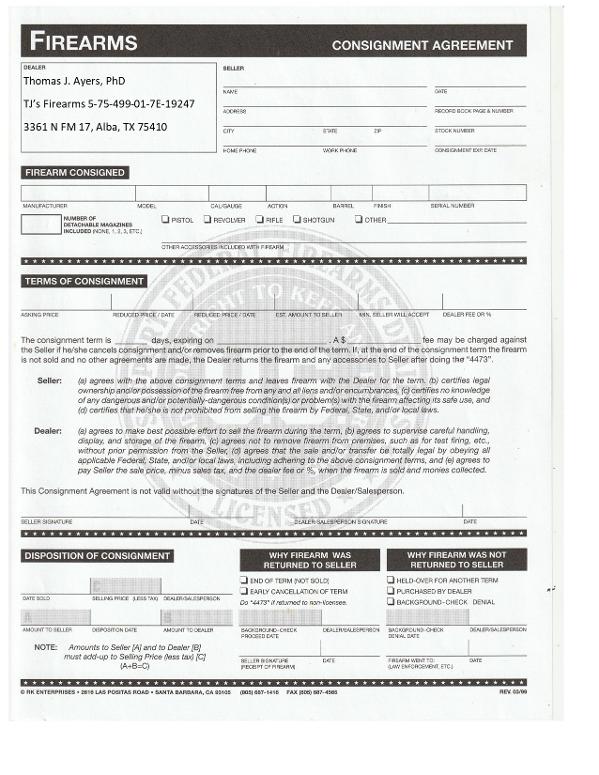
The agreement should identify the person consigning the firearm and the dealer receiving it. Use full names, current contact information, dates, and signatures. A verbal understanding may feel fine between neighbors, but a signed document is the better way to prevent confusion.
Firearm description and condition
Every consigned firearm should be described accurately. The make, model, caliber or gauge, serial number, finish, and visible condition should be recorded. If the firearm includes an optic, sling, case, magazines, custom grips, original box, manual, or other items, those items should be listed too.
Condition affects value. A worn hunting rifle that runs well may still be worth a solid price, but honest notes about wear, modifications, missing parts, or known mechanical issues help the dealer represent it correctly. Do not assume that an accessory is included just because it was handed over with the firearm. Put it on the paperwork.
Photos can also help establish condition at intake. This is particularly useful for collectible firearms, engraved pieces, older revolvers, and firearms with aftermarket accessories. Clear records protect the owner and dealer if questions come up later.
STEP – 2 -What Is a Firearm Consignment Agreement?
A firearm consignment agreement is a written arrangement between the firearm owner and a licensed dealer. The owner leaves a firearm with the dealer for sale. The dealer markets it, shows it to potential buyers, and handles the sale process for an agreed commission or fee.
The owner and dealer should agree on the essential terms before the firearm is accepted. That includes the firearm’s identifying information, the starting price, the commission, the length of the consignment period, and the conditions for returning the firearm if it does not sell.
A good agreement protects both sides. The owner has a record of what was surrendered and what they should receive. The dealer has clear permission to possess, display, and sell the firearm under the stated terms. When details are left to memory, problems start quickly - especially if the firearm has sentimental value, collector value, custom work, or a higher-than-average market price.
CONSIGMENT 10 STEPS
STEP - 1
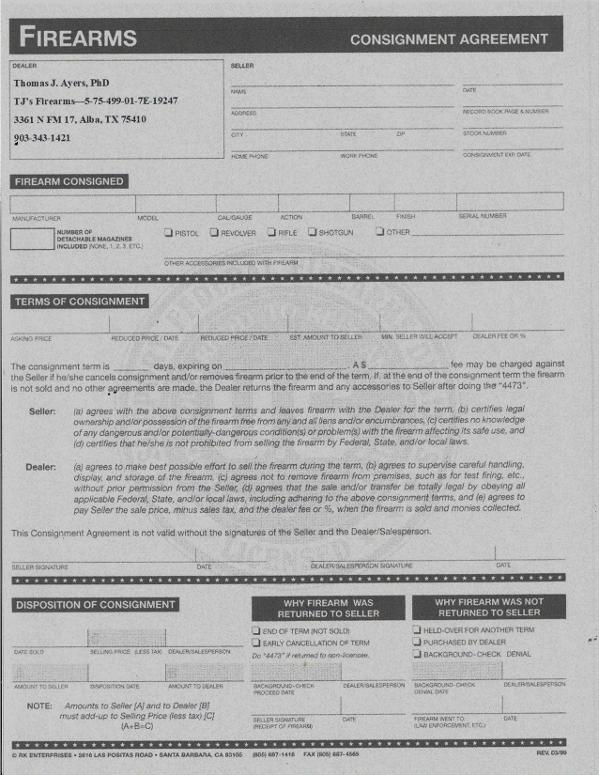
Firearm Consignment Agreement (See Attachment)
A firearm consignment agreement puts the sale of your firearm in writing before it ever reaches the sales floor. For an East Texas owner, that matters. You want to know who has possession of the firearm, what price it will be offered at, what the dealer earns, and when you get paid if it sells.
Consignment can be a practical choice when you do not want to handle calls, meet unknown buyers, negotiate in a parking lot, or manage the paperwork involved in a private sale. A local dealer can display the firearm to qualified customers, answer product questions, and complete the transfer through the proper dealer process. But consignment is not the same as selling a firearm outright to a shop. You still own the firearm until a lawful sale is completed, and the agreement should make every part of that relationship clear.
STEP – 8 - WARNING !
Do Not Let Sentiment Force a Bad Decision
Not every inherited firearm needs to be sold. A grandparent’s first deer rifle may matter more to the family than its cash value. Before the sale, give close relatives a fair chance to identify items they want to keep, provided the transfer is lawful and the estate allows it. Put those decisions in writing just as you would a sale.
For the firearms that do need to be sold, take the steady route. Secure them, document them, price them honestly, and use a process that respects both the law and the person who left them behind. That is how you turn a difficult task into a clean, responsible next step for the family
STEP 7
Keep the Paper Trail Clean
Whether you sell through a dealer or another lawful method, document the transaction. Keep a record of the firearm description, serial number, sale date, amount received, buyer or dealer information as appropriate, and any estate paperwork supporting your authority. Save the consignment agreement and final settlement statement if you use a dealer.
This paperwork matters for more than peace of mind. Executors may need it for estate accounting. Heirs may need it to understand how proceeds were divided. If a firearm is later reported stolen, traced during an investigation, or questioned by another family member, clear records show that you handled the sale responsibly.
If you are unsure whether a firearm belongs to the estate, whether probate has been completed, or whether a particular transfer is lawful, pause and get advice from an estate attorney, firearms attorney, or qualified FFL. A short delay is better than a sale that creates trouble for the family.
STEP 6
Work With a Dealer Who Will Give You a Straight Answer
Tour welcome to bring the firearms in safely and only after confirming the dealer’s preferred intake process. Call ahead before transporting a collection, especially if there are many firearms or you are unsure whether an item is regulated. Keep guns unloaded and cased during transport. Do not walk into a store with a firearm carried openly in your hands.
A knowledgeable dealer should be willing to explain the difference between a quick purchase and consignment. A direct purchase is usually faster and gives the estate immediate funds, but the offer reflects the dealer’s need to inspect, store, market, and resell the firearm. Consignment may produce a higher return, but payment comes after the firearm sells and the dealer’s commission is deducted.
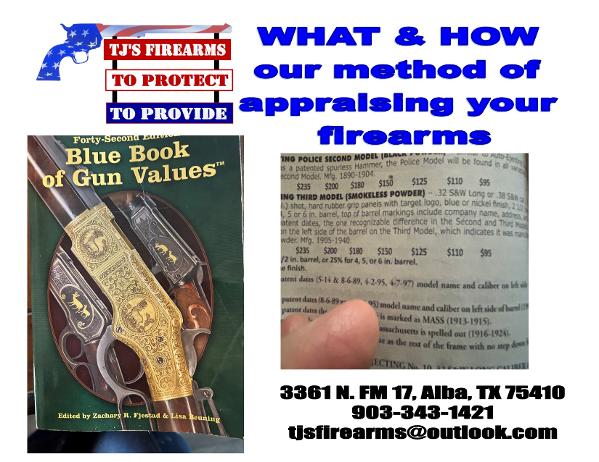
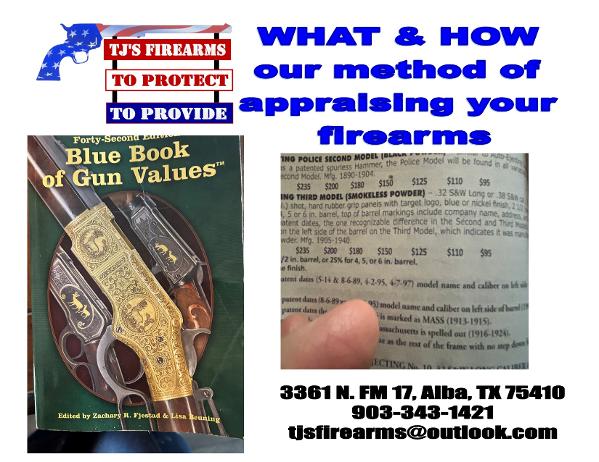
Ask how the dealer arrives at a price. My self I us a manual see attached photo should account for condition and demand, not just an optimistic number found online. Internet asking prices are not the same as completed local sales. A firearm sitting unsold for months at an inflated price does not help an estate close its books.
STEP 5
Choose the Right Way to Sell Inherited Firearms
There is no single best choice for every collection. The right method depends on how quickly the estate needs funds, how much work you can take on, and whether the firearms have collector value.
A private sale may bring more money on a common firearm, but it puts more responsibility on the seller. In Texas, private sales are not a free pass to sell carelessly. You must not sell or transfer a firearm to someone you know or have reason to believe is prohibited from possessing one. You also need to follow federal rules for interstate transactions. A firearm going to a buyer who lives in another state generally needs to go through a Federal Firearms Licensee in the buyer’s state.
An estate or collector auction can make sense for a large collection, particularly when it includes rare pieces. The trade-off is time, seller fees, shipping concerns, and less control over the final price. Auctions can also be a poor fit for a handful of ordinary hunting rifles or handguns that a local market can absorb.
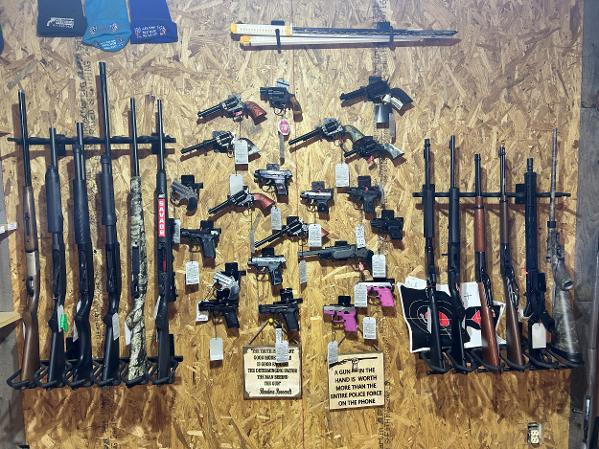
For many families, consignment through us a local firearms dealer is the practical middle ground. WE will do the inspection of the firearms, having establish a realistic pricing, market them to qualified local buyers, handle the buyer-side transfer process, and maintain transaction records. You still need to understand the consignment agreement, including the commission, pricing authority, storage terms, how long the firearm will be displayed, and what happens if it does not sell.
TJ's Firearms offers a formal consignment option for owners who want a structured local channel rather than handling a firearm sale alone.
STEP 4
Set Aside Firearms That Need Special Attention
Some inherited items should not be treated like ordinary sporting guns. This includes suppressors, short-barreled rifles, short-barreled shotguns, machine guns, certain other regulated firearms, and firearms with unclear legal status. These can involve federal National Firearms Act rules and estate-transfer requirements.
Do not sell, give away, or move one of these items until you have received qualified guidance. The estate may need specific federal approval before it can be transferred. If you find a firearm with an altered, removed, or questionable serial number, leave it alone and speak with law enforcement or a qualified firearms attorney. A good sale is never worth stepping into a legal problem.

STEP 3
Know What You Inherited Before You Price It
A firearm’s make and model are only the beginning. Condition, caliber, barrel length, production period, modifications, included accessories, and local demand all matter. A Ruger, Mossberg, Savage, Smith & Wesson, SIG SAUER, or Bond Arms firearm may have a strong practical market, but the exact configuration still affects the price.
I will RECORD each firearm carefully. Write down the manufacturer, model, caliber or gauge, serial number, general condition, and any visible markings. Take clear photos from both sides, plus close photos of markings and any damage. DO NOT post serial numbers publicly in an online advertisement. Keep that information in your private records.
Be cautious with family stories. A firearm may have been carried in World War II, used on a ranch, or passed down for generations, and those details can be meaningful. They do not automatically make it rare or high-dollar. On the other hand, a firearm that looks ordinary can be a scarce variation. If something appears old, unusually marked, engraved, or collectible, I’ll help you evaluated while during the appraisal
STEP 2
SECOND , Secure the Firearms and Estate Records
If your not sure wait for me to arrive, I will make sure each firearm is unloaded, muzzle in a safe direction, remove the magazine, open the action, and visually check the chamber. Store firearms in a secure location where children, visitors, and unauthorized persons cannot access them. Keep ammunition separate while you work through the estate.
DO NOT clean, refinish, alter, or replace parts right away. Old finish, original grips, factory boxes, manuals, sling swivels, and even a worn-looking case can affect collector value. A well-used deer rifle may be worth its practical market price. An older Colt, Winchester, Remington, or military firearm may be worth more because it remains original. Once an original part is discarded or a firearm is aggressively polished, that value may be gone.
Lets gather what you have before taking the next step: the will or trust paperwork, letters testamentary or other estate documents when applicable, any purchase records, factory boxes, serial-number records, and notes identifying who owned what. The person handling the sale should be the executor, administrator, trustee, or heir with clear authority under the estate plan or probate process. If several family members have an interest in the collection, get agreement in writing before a firearm is sold. That small step can prevent a hard family dispute later.
TJ's FIREARMS does firearm appraisal
STEP 1
Secure the Firearms and Estate Records
A gun safe can hold more than firearms after a family member passes. It can hold hunting rifles with stories behind them, a revolver nobody has handled in years, and questions about value, ownership, and safety. If you are figuring out how to sell inherited firearms, DO NOT rush to post them for sale or carry them around town. Start by calling T.J. at TJ’s Firearms FEDERAL FIREARM LICENSE dealer with appraisal experience, securing the collection, confirming your authority to sell it, and choosing a lawful path that protects both the estate and the buyer.
For many East Texas families, a local F.F.L. dealer-managed sale is the simplest answer. It keeps the transaction accountable, gives the firearms access to serious buyers, and avoids the guesswork that comes with selling a firearm to a stranger.
DAY 8
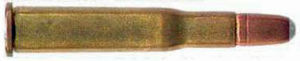
The .30-30 Winchester has put food on the table for millions of people in hunting situations
The .30-30 is by far the most common cartridge shot from lever action rifles. The .30-30 is not commonly used for extreme long-range shooting across wide-open spaces, but modern innovations in ballistic tipped bullets for lever action guns have moved the long-range capabilities of the .30-30 somewhat closer to parity with higher-velocity cartridges. In any case, a hunting-specific advantage of the .30-30 over those cartridges is that it leaves lower volumes of spoiled (destroyed or bloodshot) venison after a kill, leading to less waste.
Use on big game in North America
In Canada and the U.S., the cartridge has likely, at some point, been used on all big game species. More recently, it has been used on whitetail, mule deer, pronghorn, caribou, elk, moose, and black bear. It is commonly said that in the U.S. and Canada more deer have been killed with the .30-30 than with any other cartridge, and perhaps this was true for a time in the U.S.
Recoil characteristics
Average recoil from a typical 150-grain load at 2,390 feet per second (730 m/s) in a 7.5 lb (3.4 kg) rifle has been calculated to be 10.6 foot-pounds (14.4 J) felt at the shooter's shoulder. For point of reference, that falls roughly between that of a .410 and a 20 gauge shotgun. Ordinarily recoil feels similar to slightly greater than a .243 Winchester, and about half that of the .30-06 Springfield
DAY 7
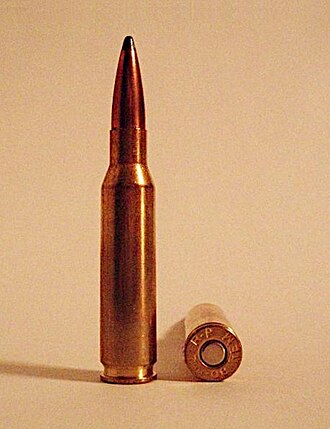
7mm Remington Magnum: For Open Country and Longer Shots
The 7mm Remington Magnum is a serious option for hunters who regularly travel west or hunt places where long, open shots are possible. It offers flat trajectory and strong performance on deer-sized game through elk-sized animals. In East Texas timber, however, much of that extra reach may go unused.
Magnum cartridges are not automatically better. They cost more to feed, create more recoil and muzzle blast, and can make it harder for a new hunter to shoot well. Choose the 7mm Remington Magnum when its extra range and power match your actual hunting plans, not because it sounds impressive.
DAY ONE
Best Hunting Rifle Calibers by Game and Range
A rifle that works well from a box blind over a food plot may not be the rifle you want for a long shot across a pasture, a hard-charging hog, or an out-of-state elk hunt. That is why the best hunting rifle calibers are not one-size-fits-all. The right choice comes down to the game you hunt, the ranges you realistically shoot, how well you handle recoil, and what ammunition you can keep on hand.
For most East Texas hunters, a practical caliber that handles whitetail deer and hogs without beating up the shooter is hard to improve on. A hunter who travels for larger game may want more reach and energy. The goal is not to buy the biggest cartridge on the shelf. It is to carry a rifle you can shoot accurately, practice with often, and trust when the season opens.
A caliber earns its reputation in the field, not just on a ballistics chart. Bullet construction, shot placement, rifle fit, and the hunter behind the trigger matter as much as the headstamp on the ammunition. Still, certain cartridges have proven themselves for generations because they offer a useful balance of accuracy, recoil, availability, and performance.

DAY 2
243 Winchester: A Light-Recoiling Deer Rifle
The .243 Winchester is a strong choice for smaller-framed hunters, young hunters, and anyone who wants mild recoil without stepping down to a rimfire. With a proper hunting bullet, it has taken plenty of Texas whitetail deer cleanly. It is also useful for coyotes and other predators, giving a hunter one rifle for more than one job.
Its trade-off is limited margin on large hogs and larger game, especially when shot angles are less than ideal. It can work when the hunter is disciplined about shot selection, but it is not the first choice for someone who expects to hunt big-bodied hogs regularly. The .243 rewards careful shooting and regular practice.
DAY 3
6.5 Creedmoor: Easy to Shoot, Capable at Distance
The 6.5 Creedmoor remains popular because it is comfortable to shoot, generally accurate, and capable well past normal East Texas hunting distances. For deer and average-size hogs, it offers a flat-shooting option with manageable recoil. It is especially appealing for hunters who spend time at the range and want to build confidence from field positions.
Some folks dismiss it because it became fashionable. That does not change its real-world usefulness. The better question is whether it fits your hunting. If your shots may stretch across a pasture or field, the 6.5 Creedmoor makes sense. If all your hunting is inside 100 yards in thick timber, a more traditional cartridge may serve you just as well.
DAY 4
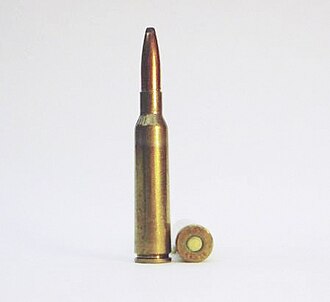
270 Winchester: A Proven All-Around Choice
The .270 Winchester has put venison in Texas freezers for decades. It shoots flat enough for open-country deer hunting, carries enough authority for hogs, and can be used for larger game with the right ammunition and sensible distances. Recoil is noticeable but manageable for most adult shooters in a properly fitted rifle.
Its biggest advantage is simple: it works. There is no mystery to it, and ammunition is commonly available in a range of hunting loads. A hunter who wants one traditional rifle for whitetail, mule deer, hogs, and occasional Western trips should give the .270 Winchester an honest look.
DAY 5
308 Winchester: Practical, Available, and Hard to Beat
If one cartridge represents the practical hunting rifle, it may be the .308 Winchester. It is effective on deer, hogs, black bear, and many larger North American animals within reasonable ranges. Ammunition choices are broad, rifles are plentiful, and recoil remains manageable in most sporting rifles.
The .308 is not the flattest cartridge, but East Texas does not require extreme long-range performance for most hunting situations. Inside normal woods, feeder, and pasture distances, it delivers dependable performance. For a hunter who wants a readily available caliber with a long record of success, the .308 Winchester is one of the best answers.
